


The measure is an environmental protection requirement to avoid discharging too much hot water into rivers already warming from the heatwave.
France’s main energy provider on Sunday said three nuclear reactors had been temporarily shut down and eight others were operating at reduced power due to the heatwave sweeping France. “Due to the weather conditions and to comply with regulations on (cooling water) discharges, and thus to protect the environment,” reactors at the Golfech, Bugey and Chooz plants, located on the banks of the Garonne, Rhone and Meuse rivers respectively, have been shut down, the EDF energy group told AFP. The measure is an environmental protection requirement to avoid discharging too much hot water into rivers already warming from the heatwave.
Power plants critical to the country’s electricity production use river water to cool their reactors, which heats the water that is then released back into the river. The economy ministry on Saturday issued an exemption to the temperature limits for the heating of the Rhone around the Bugey plant “to ensure the security of the power grid”, valid until July 20. The shut downs are the second time in recent weeks that EDF has had to stop nuclear reactors due to extreme heat, after a record-breaking heatwave hit France in June.
On Sunday, the third heatwave to sweep the country since May saw more than a third of France under the national weather service’s highest heat alert. More than 25 million people were baking in temperatures that forecasters said could reach up to 41C, according to an AFP tally based on population data. The heatwave has forced tourist hotspots to shutter early, event cancellations and a shortened stage on the Tour de France.
Wildfires have proliferated and deaths by drowning have spiked amid the heat. Since the end of May, France has been hit hard by repeated episodes of intense heat, which have caused excess mortality and exposed problems with infrastructure maladapted to extreme weather, the increasing frequency of which scientists have linked to man-made climate change.
- Published
- Jul 12, 2026
- Updated
- Jul 12, 2026
- Source
- Cp24
- Category
- Environment
- Read time
- 1 min
Key facts
Why this matters locally
This environment story matters locally because it may affect readers, businesses, commuters, families, or public services in British Columbia.
Local impact
BC Post links this item to British Columbia coverage so readers can follow related city updates, weather, traffic, events, and category news in one place.
Timeline
Source and credit
BC Post may summarize, organize, and add local context for reader clarity. Original reporting remains with the listed publisher.
Related Articles
View all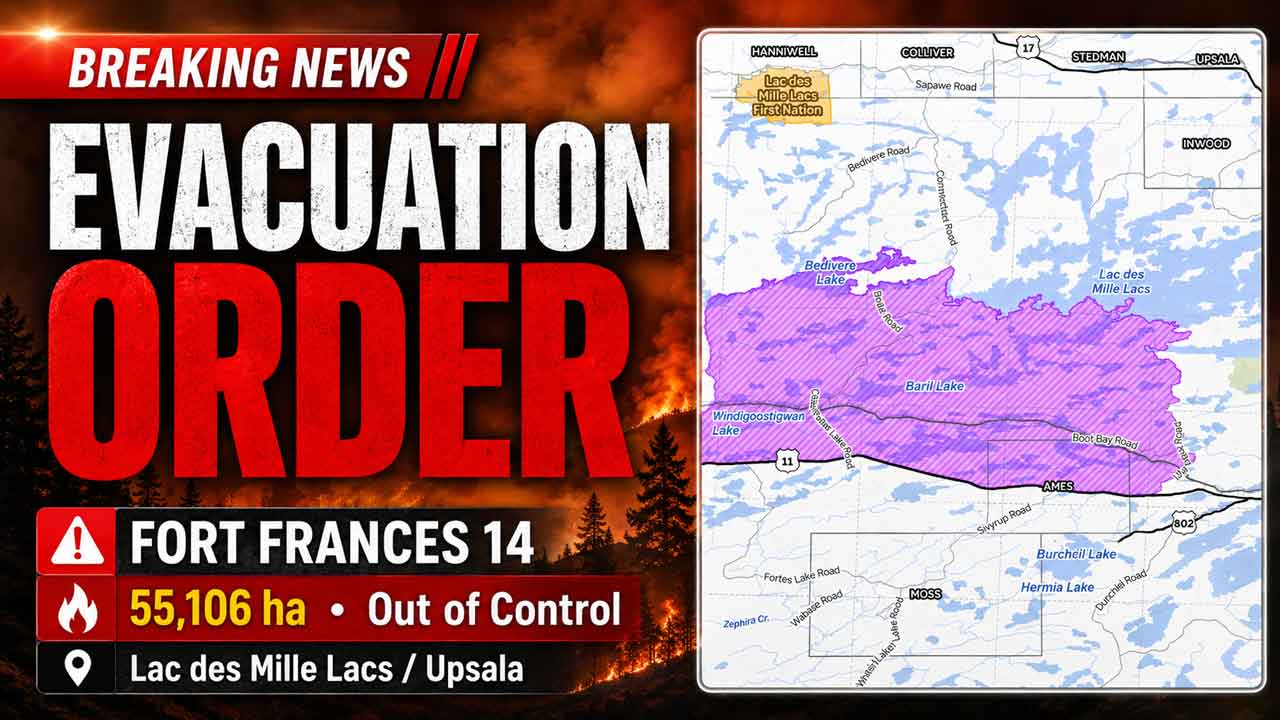 Environment
Updated Evacuation Information for Wildfire Fort Frances 14 (July 17 2026)
Environment
Updated Evacuation Information for Wildfire Fort Frances 14 (July 17 2026)
 Environment
50-hectare wildfire burns between Clearwater and 100 Mile House
Environment
50-hectare wildfire burns between Clearwater and 100 Mile House
 Environment
A powerful movement of healing arrives at Delta’s Discovery Centre
Environment
A powerful movement of healing arrives at Delta’s Discovery Centre
 Environment
2 wildfires north of Anahim Lake currently out-of-control
Environment
2 wildfires north of Anahim Lake currently out-of-control
 Environment
Port Coquitlam mayor launches program that removes graffiti on public property within 48 hours
Environment
Port Coquitlam mayor launches program that removes graffiti on public property within 48 hours
 Environment
'Fending for ourselves' after Manitoba wildfire forces evacuation: O-Pipon-Na-Piwin leaders
Environment
'Fending for ourselves' after Manitoba wildfire forces evacuation: O-Pipon-Na-Piwin leaders
More Local Coverage
Latest news Business
AI Market Trends: Q2 2026 Review and Forecast
Business
AI Market Trends: Q2 2026 Review and Forecast
 Politics
Powerful pro-life ad featuring boxing legend to air during final World Cup matches
Politics
Powerful pro-life ad featuring boxing legend to air during final World Cup matches
 Local News
Cowichan sports shorts: rugby, hockey, biking
Local News
Cowichan sports shorts: rugby, hockey, biking