


A groundbreaking collaboration between Western University and Fanshawe College is weaving a new future for discarded clothing, turning what was once destined for landfills into a valuable resource for agriculture.
A groundbreaking collaboration between Western University and Fanshawe College is weaving a new future for discarded clothing, turning what was once destined for landfills into a valuable resource for agriculture. Researchers are developing innovative methods to convert textile waste into biochar, a substance that they say can significantly improve soil health and boost crop yields. The fashion industry’s environmental footprint is substantial, with vast quantities of clothing ending up in landfills each year.
Jennifer Wright, a professor and researcher from Fanshawe’s Fashion Design program, has been a long-time advocate for solutions to this growing problem. “We have a real problem with textile waste and the amount of clothing that we discard and put into landfill,” Wright stated. Recognizing this challenge, her work at Fanshawe’s Centre for Research and Innovation has joined forces with Western’s Institute for Chemicals and Fuels from Alternative Resources (ICFAR).
The innovative approach centres on a process called pyrolysis. Led by Professor Franco Berruti, Founding Director of ICFAR, researchers utilize extreme heat in the absence of oxygen to break down textile materials. This process separates the elements, yielding a charcoal-like substance known as biochar.
The potential applications for this textile-derived biochar are significant, particularly in agriculture. Greenhouse experiments conducted by Heejin Lee have yielded encouraging results. “It helps the soil hold on to the water and nutrients better for the crops.
And then also it gives habitat for the microbes,” Lee noted. Her research indicates that plants can thrive with this biochar, demonstrating improved growth compared to soil without it. This transforms problematic waste into a value-added product that can actively benefit the environment.
Professor Franco Berruti emphasizes a fundamental shift in how we view waste. “At the end of the day, we want to transform the concept of waste into a different way of thinking. Waste does not exist.
It’s a resource for something else,” he said. Beyond diverting materials from landfills and enhancing agricultural productivity, the process offers a crucial environmental benefit: Carbon sequestration. “We are putting carbon back in the soil, and this is a carbon sequestration opportunity,” Berruti added.
This collaborative effort has also partnered with Goodwill Great Lakes, headquartered in London. Goodwill’s annual ‘Worn and Torn’ event encourages the public to donate even heavily soiled or damaged fabrics, preventing them from entering the waste stream. The research team plans to establish a test plot to further evaluate the biochar’s performance in real-world conditions.
With an eye toward scaling up their work, the researchers have applied for a federal grant, expressing confidence in the wider range of applications and potential commercial opportunities stemming from their innovative approach.
- Published
- Jul 14, 2026
- Updated
- Jul 14, 2026
- Source
- Ctv News
- Category
- Environment
- Read time
- 2 min
Key facts
Why this matters locally
This environment story matters locally because it may affect readers, businesses, commuters, families, or public services in British Columbia.
Local impact
BC Post links this item to British Columbia coverage so readers can follow related city updates, weather, traffic, events, and category news in one place.
Timeline
Source and credit
BC Post may summarize, organize, and add local context for reader clarity. Original reporting remains with the listed publisher.
Related Articles
View all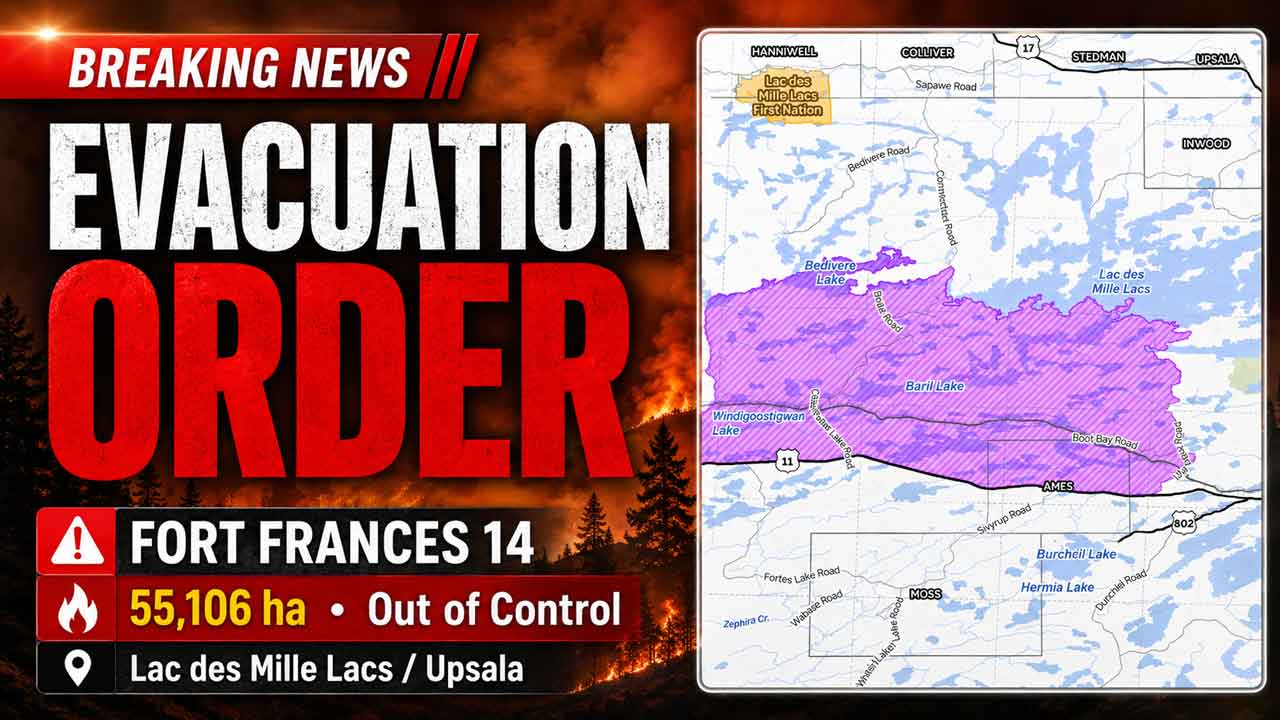 Environment
Updated Evacuation Information for Wildfire Fort Frances 14 (July 17 2026)
Environment
Updated Evacuation Information for Wildfire Fort Frances 14 (July 17 2026)
 Environment
50-hectare wildfire burns between Clearwater and 100 Mile House
Environment
50-hectare wildfire burns between Clearwater and 100 Mile House
 Environment
A powerful movement of healing arrives at Delta’s Discovery Centre
Environment
A powerful movement of healing arrives at Delta’s Discovery Centre
 Environment
2 wildfires north of Anahim Lake currently out-of-control
Environment
2 wildfires north of Anahim Lake currently out-of-control
 Environment
Port Coquitlam mayor launches program that removes graffiti on public property within 48 hours
Environment
Port Coquitlam mayor launches program that removes graffiti on public property within 48 hours
 Environment
'Fending for ourselves' after Manitoba wildfire forces evacuation: O-Pipon-Na-Piwin leaders
Environment
'Fending for ourselves' after Manitoba wildfire forces evacuation: O-Pipon-Na-Piwin leaders
More Local Coverage
Latest news Business
AI Market Trends: Q2 2026 Review and Forecast
Business
AI Market Trends: Q2 2026 Review and Forecast
 Politics
Powerful pro-life ad featuring boxing legend to air during final World Cup matches
Politics
Powerful pro-life ad featuring boxing legend to air during final World Cup matches
 Local News
Cowichan sports shorts: rugby, hockey, biking
Local News
Cowichan sports shorts: rugby, hockey, biking