

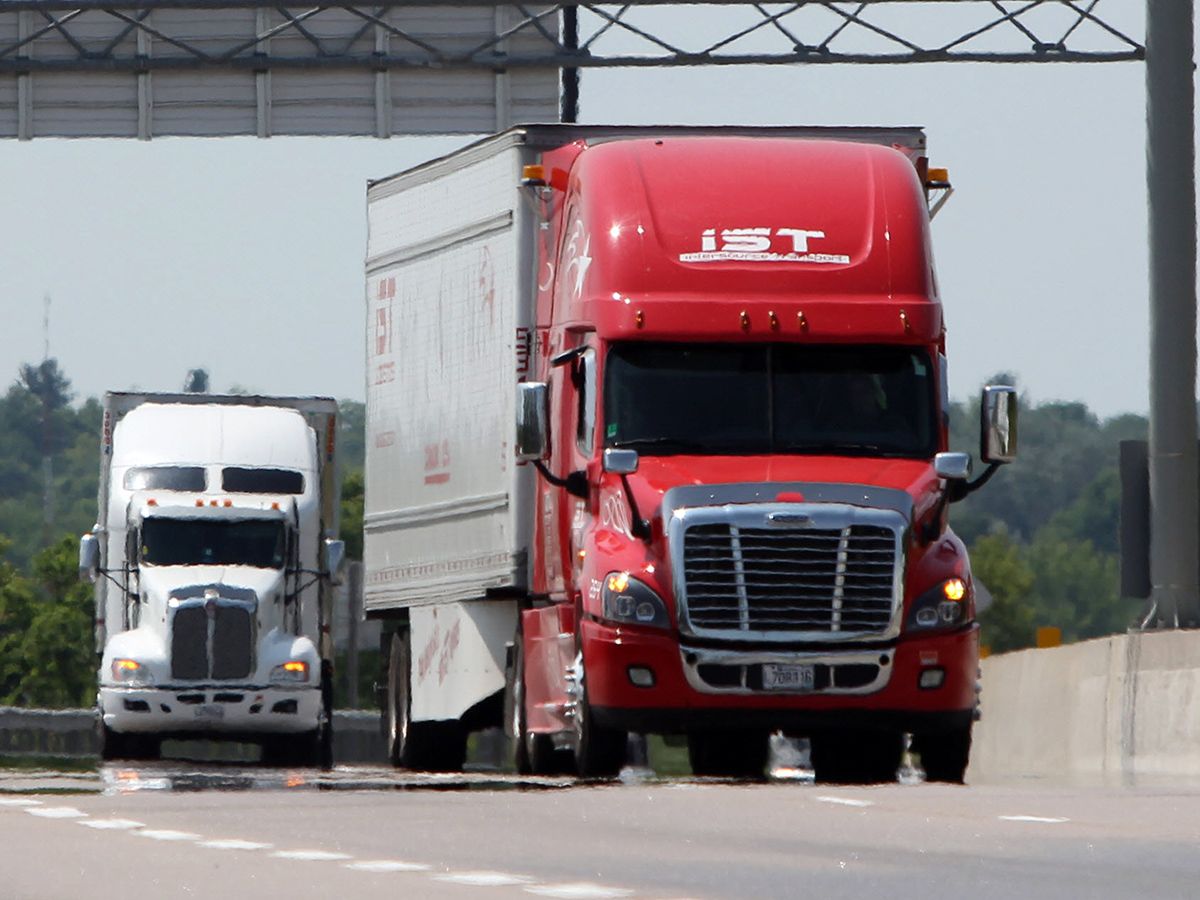
According to the report, a clear majority of Canadian small businesses have not noticed a change in the ease of doing business across provincial borders
A leading business group is giving some provinces and the federal government good grades for trying to break down Canada’s costly internal trade obstacles, even as those barriers continue to cost Canadians billions of dollars a year. In its annual report on internal trade due to be released Wednesday, the Canadian Federation of Independent Business (CFIB) credited Ottawa and the provinces for their efforts in trying to tackle internal trade barriers, while acknowledging that most of the “significant progress” stems from the increased attention they’re paying to the problem, without much by way of results.
The federal government, which removed all federal barriers to internal trade a year ago, was given an A+ grade after receiving a mark of C a year earlier. Eight of the 10 provinces received As this year, with British Columbia receiving an A-. Newfoundland and Labrador didn’t receive a grade because of a recent government change.
The grades were much higher than in most years, the report said, because of a new multiplier that kicked in a year ago for those provinces that changed their rules to recognize some of the regulations and standards of other jurisdictions. But Keyli Loeppky, one of the
Source and reference
authors of the report, The State of Internal Trade, said governments should expect harsher grading next year because CFIB will be looking for tangible results. Loeppky, CFIB’s senior director for Alberta and interprovincial affairs, also said that the group wants to see the federal government start to use its ability to penalize and reward provinces for working to tear down trade walls. Loeppky said Ottawa may have to get tougher because it’s unlikely the provinces will get very far on their own. “They do need to step up,” said Loeppky. “We’ve seen enough announcements — now we want to see results.” The federal government has authority over interprovincial trade but has never been willing to use its leverage — perhaps including adjusting big-ticket transfer payments or corporate subsidies — to bring down interprovincial trade barriers. Despite the good grades, many economists...
Read original source- Published
- Jul 15, 2026
- Updated
- Jul 15, 2026
- Source
- National Post
- Category
- Local News
- Read time
- 5 min
Key facts
Why this matters locally
This local news story matters locally because it may affect readers, businesses, commuters, families, or public services in British Columbia.
Local impact
BC Post links this item to British Columbia coverage so readers can follow related city updates, weather, traffic, events, and category news in one place.
Timeline
Source and credit
BC Post may summarize, organize, and add local context for reader clarity. Original reporting remains with the listed publisher.
Related Articles
View all Local News
Cowichan sports shorts: rugby, hockey, biking
Local News
Cowichan sports shorts: rugby, hockey, biking
 Local News
Cost of B.C. Massey tunnel replacement doubles from previous budget
Local News
Cost of B.C. Massey tunnel replacement doubles from previous budget
 Local News
Lions earn first win by handing Elks their first loss in 36-24 decision
Local News
Lions earn first win by handing Elks their first loss in 36-24 decision
 Local News
Consumer watchdog secures 4 ticketing undertakings during World Cup
Local News
Consumer watchdog secures 4 ticketing undertakings during World Cup
 Local News
Business leader says he hopes Greater Victoria gets fair share of submarine money
Local News
Business leader says he hopes Greater Victoria gets fair share of submarine money
More Local Coverage
Latest news Politics
Powerful pro-life ad featuring boxing legend to air during final World Cup matches
Politics
Powerful pro-life ad featuring boxing legend to air during final World Cup matches
 Top Stories
Yukon minerals work still under review despite federal announcement
Top Stories
Yukon minerals work still under review despite federal announcement