

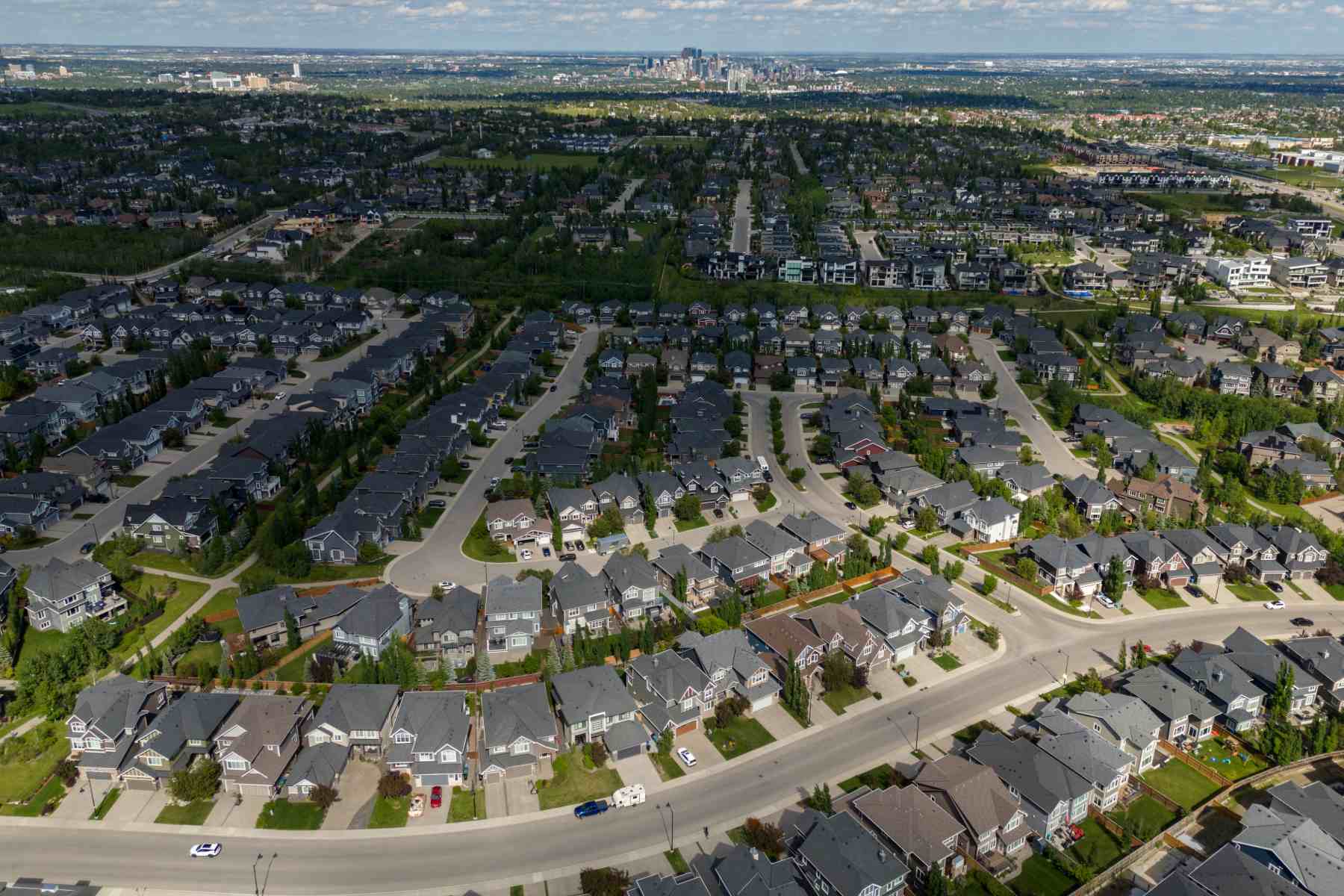
In Calgary, the wealthy have a virtual stranglehold over meetings where key decisions are made The post How Canada’s Richest Residents Block Affordable Housing first appeared on The Walrus .
On a cold March 30, I found myself pacing beside Calgary’s city hall. I was holding a crinkled paper, reading out loud a speech I’d written. Clouds of steam rose from my mouth in the chilly air.
I was planning to address a city council public hearing on whether to undo one of Calgary’s most consequential reforms. In 2024, faced with a severe housing shortage, city council voted to sweep away its patchwork of low-density residential zoning in favour of a single medium-density standard (R-CG) across the city—a move also known as blanket rezoning. This allowed developers to build row houses in any residential area without having to go through a costly land-use change, allowing the market to more capably meet demand.
But after public backlash toward the policy, the newly elected council was doing a complete 180, reintroducing low-density zoning to preserve “neighbourhood character.” My speech was in support of keeping the density in place. Feeling ready, I walked into the chambers and took my seat.
The meeting had already been running for six days. These public hearings can be gruelling affairs. This one was the largest ever held in Calgary, with 411 speakers talking for six minutes each, with added time for questions.
Speakers in opposition to density mostly painted dire images of permanently changed neighbourhoods. Villages, once quiet and tree-lined, were now busy and loud, with modern housing monstrosities being built on every corner. Those who spoke in favour of density described their challenges in paying rent and finding anywhere to live.
After a long wait, my panel was called. My friend Kathryn Davies and I had spent days preparing my remarks. I wanted to shift the debate in a different direction.
Davies had watched dozens of hours of similar council meetings while I processed the findings. What I found was that these rezoning meetings didn’t represent the voice of everyday Calgarians. Their speakers were from communities that were far richer than average, with 25 percent of them being from the top 3 percent of wealth in the entire city.
I reported to the council that, instead of a straw poll on the will of Calgarians, these hearings are a form of class warfare. They are captured by a small fraction of the wealthiest citizens, who likely want to wield municipal law against the poorest in the community to protect their own assets. This revelation doesn’t just reflect on these individuals, but it reveals a systemic flaw in Canadian society and democracy that’s holding back all effective housing reform.
Before I could finish, however, Mayor Jeromy Farkas spoke up to stop me, arguing, in effect, that I was discriminating against the rich. He let me continue as long as I didn’t comment on any other speakers. But because that was the main pillar of my speech, I sputtered out into improvised remarks, while trying to figure out how to communicate with my hands tied.
The meeting predictably concluded with higher-density zoning being repealed. What I couldn’t say during that event I want to say now, in this article, starting with the housing problem itself. The city of Calgary is a stark illustration of the housing affordability crisis.
Once a shining beacon of affordable living in a large Canadian urban centre, it wasn’t spared by a massive increase in housing costs. According to the Calgary Real Estate Board, between 2021 and 2024, home prices rose by 32 percent while rent prices rose by a meteoric 41 percent, from $1,235 to $1,744. In the same period, the average Calgarian’s income rose by only 8 percent meaning, in a four-year period, both buying and renting rapidly became materially less affordable.
This has resulted in a prediction by the city in 2025 that it will need four times more housing supply than what is currently being developed to keep up with demand. For many young Calgarians, the idea of owning a home is a fantasy: their new goal is simply to afford entry-level rent. No single event created this crisis.
Rather, the past six years brought together a perfect storm of forces. Higher interest rates raised typical monthly mortgage payments. There is also a composition problem, where a high volume of rental units is being built, but they are priced up-market, too expensive to accommodate the market segment that actually needs housing.
There was also a large migration of buyers from the even more expensive metropolises of Vancouver and Toronto, who started buying up Calgary properties that they saw as bargains compared to similar houses in their own cities. Among all of the potential causes, it’s easiest to distill the problem down to its base components of demand and supply. From the demand side, one glaring driver is population growth.
In 2024, the federal government allowed in 483,000 permanent residents over the year. Newcomers especially affect the rental market, as they almost always rent when they first enter the country. As a knee-jerk reaction to public pushback over high housing prices, in 2025, the government dropped the allowed number of permanent and temporary resident visas, which rapidly increased rental vacancies.
This was a reasonable short-term solution, but it will never be effective in the long term. A complete accounting of the issue needs to take into account the problem of a housing-hungry population hitting a rigid and artificially suppressed supply. Before 2024, the majority of residential land parcels were zoned to single-detached only, which effectively capped the supply that developers could build and all but ensured that the city sprawled out in every direction.
If a builder wanted to make a building of higher density they needed to start a months-long process of filing for a land-use redesignation that involved a council public hearing. According to city records, this is a process that takes 177 days on average, and it isn’t cheap. Shameer Gaidhar of the Calgary Inner City Builders Association estimated that appeal delays could cost a small row house project about $500 a day.
It’s a regulatory regime that inflicts a death by a thousand cuts to new housing projects. Developers may be able to afford the land, labour, and materials, but a series of regulatory hoops drain them into the red before construction can even be seen as profitable. This is compounded by NIMBY neighbours who attend public meetings and push to extend projects into the future.
They may convince council to ask the developer for a shadow study, and then a parking study of the site, in a cycle of review until motivation for the project folds. In 2024, when blanket rezoning was approved, 1,564 new homes and 1,473 suites went straight to the development permit phase, showing just how much supply the previous regime was holding back. Blanket rezoning being repealed so quickly after its passing—the outcome of the meeting I attended—brings up an important question: Why are Canadian politicians so bound to lengthy and restrictive approval processes?
For decades, governments urged Canadians to treat their homes as safe wealth-creation vehicles. Today, 66.5 percent of Canadians are homeowners. A Statistics Canada 2023 Survey of Financial Security shows total principal residence assets at $7.35 trillion, compared with $2.50 trillion in non-pension financial assets.
This means that Canadians have 2.9 times as much wealth in their principal residences as in non-pension financial assets. Housing is an attractive investment for a few reasons. First, unlike stocks, land value will never drop to zero.
Even if a meteor hit a house and completely destroyed it, there can still be a collective understanding that you own the land that was hit. Second, populations are statistically likely to continually rise over time, meaning there’s a high chance that a home investment will appreciate in value. As appealing as this sounds, residential wealth isn’t evenly distributed across Canadians.
People born in 1990 to parents who own one home are twice as likely to own one themselves now compared to those from families without homes. If multiple homeowners are in their family, they are nearly three times as likely. This illustrates how wealth compounds within families over generations.
There’s also an age component. More than half of mortgage-free homeowners are over the age of sixty-five. This creates a class and generational struggle as old-money and boomer Canadians have an incentive to freeze housing supply for as long as possible to increase their asset’s value at the expense of young Canadians who haven’t even begun generating wealth.
The book Neighborhood Defenders by Katherine Einstein documents how these more privileged population segments intentionally use the levers of government to reduce housing supply across North America. In it, she studied zoning meetings from ninety-seven Massachusetts cities and towns. She found that the most common attendees of city council public hearings on zoning issues are “older, male, long-time residents, voters in local elections, and homeowners.”
These demographics have the wealth, time, and organizational and public speaking skills to show up to these meetings in person. During the meetings, they often don’t directly argue that higher density would decrease their housing value. Instead, they dress it up with other issues.
They complain about traffic issues or additional strain on local services, using arguments that sound altruistic on their face. Whatever language they use, the outcome they are arguing for means more wealth for them and more expensive housing for younger and less established generations. Inspired by Einstein’s book, Davies and I set out to do our own amateur research on if these trends existed in Calgary.
This became my speech. Davies watched the public hearing meetings for the R-CG zoning meeting mentioned earlier, and another meeting that intended to set up a standardized “guidebook” for city-wide development. Whenever a public speaker mentioned the community they lived in, she recorded it.
I then made a database of each Calgary community, its number of opposition and support speakers at each meeting, its population, wealth, and age. Although we didn’t have as granular of data as Einstein had in her United States studies, we still had open community-level data through Calgary’s Community Profiles portal, a database of slide decks that describe the demographic makeup of each community. The outcome was truly eye opening, but to understand it better, we need to grasp the city’s economic makeup.
Calgary’s population can be broken into three income groups. The first group is made up of 675,000 working-class people in communities whose median household income is less than $105,000. Households in these communities generally make around $84,000 annually.
Split between a working couple, their individual income would be just under Canada’s median of $46,000. Their median age is thirty-nine, and they have a home ownership percentage of 60.5 percent. They are likely made up of Gen Z, millennials, and xillenials, who either are buying their first home or living in the city’s secondary suites, basement suites, and rental apartments.
All unhoused people are in this group. They are the gig workers who deliver our meals. They are the retail and service workers.
Their income is used to pay month-to-month bills. The second group is made up of 583,000 Calgarians we’ll refer to as the comfortable middle class. They live in communities with median incomes above $105,000 and below $160,000.
Their average median community household income is $123,000. Their age is typically forty-one, just above the working-class group. About 84 percent of them own homes.
They’re likely millennials and Gen Xers who have worked their way up into middle management and achieved home ownership. They and their families are able to save, invest, and travel. Finally, the third group is made up of 35,000 Calgarians in fourteen communities we’ll refer to as the ultrarich.
These communities have average median household incomes of $200,000. Their residents are typically forty-seven years old, likely retired Gen Xers and boomers. Nine out of ten of them own homes and likely own second ones as vacation homes or are renting them out to others.
They may still be working, but they are heavily utilizing capital to generate income. Sitting atop of the financial ladder, their lives are almost completely different from the working class. Their wealth gives them a cushion against hardship other Calgarians can scarcely imagine.
They can make financial mistakes that would destroy Calgarians in the other groups and be completely unaffected. In short, they live under a different set of rules. So, what did our research dig up?
The same trend Einstein found across North America is occurring in Calgary. Across both the guidebook and R-CG meetings, 245 speakers spoke in opposition and announced what neighbourhood they were from. The average community median household income of opposition speakers in these meetings was $145,000, which is $40,000 higher than Calgary’s average.
In the guidebook meeting, the average community median household income was a whopping $188,000, which is $83,000 higher than Calgary’s average. How could these numbers be so extraordinarily high? Across both meetings, 23 percent of the speakers were from communities in the ultrarich class, representing a group that only makes up 3 percent of the total population.
In the guidebook meeting, that number was 50 percent. Even more startling, the vast majority of these ultrarich opposition speakers were from communities with median household incomes above $288,000. To ensure that this wasn’t just an extremely rare coincidence, I ran 200,000 simulations in Excel that asked the question: If these opposition speakers had been picked at random from Calgary residents, based on the communities where people actually live, how often would we get an R-CG opposition group from communities this wealthy?
The test is similar to pulling 245 marbles from a bag of marbles representing every Calgarian and then repeating the process over and over. The answer was: never. The makeup of the opposition speakers is so economically unrepresentative of everyday Calgarians that they didn’t appear once in 200,000 simulations.
On the other side of the debate, the group of speakers in support of housing development’s makeup was far more economically representative of Calgarians. Their average median household income was $91,000, much closer to the city’s actual household income. Only 2 percent of development supporter speakers came from ultrarich communities, which closely matches their actual proportion of the city.
Based on the communities they represent, the likely median age of the opposition speakers is 42.4 years old, which is four years higher than Calgary’s median age. This is in line with assumptions that those passionate enough to oppose to new housing tend to be more senior, wealth-holding individuals. Our research therefore confirmed that Einstein’s findings apply to Canada as well.
Encouragingly, several cities are testing promising solutions. Victoria and Toronto have both developed citizen planning panels assembled by a city-wide lottery. The random nature allows the city to canvas opinions from a much more representative population than what they’d receive from open hearings.
Although they still host public hearings, they take them as one gauge of community sentiment. There have also been exemplary efforts by cities and nonprofit organizations to find non-market housing solutions. Notably, Medicine Hat, Alberta, has effectively eradicated chronic homelessness by using public funds to build a high volume of simple small houses.
If a resident has been living on the streets for more than ten days, they are given the home. The city determined this was more cost effective on public services. These solutions are inspiring, but the main roadblock to solving this issue remains that a politically overrepresented proportion of the Canadian citizenry benefit immensely from housing scarcity.
Changing the financial incentives that cause Canadians to stand in the way of affordability seems insurmountable, but the first step is just believing it can be done. Young people won’t be able to experience the real housing affordability they deserve until Canada, as a society, starts to view housing as homes instead of as investments. The research project that Davies and I did can seem complex, but it’s possible to apply elsewhere as long as large enough pools of data are available.
I hope that this can be only the beginning of a longer and larger national conversation about the state of democratic representation in our housing policy debates, one that can cover every region and market across the country. The stakes are too great for Canadians, especially the young and underrepresented, to let the inequitable housing status quo continue unabated. Together, let us do the hard work of bringing clarity and making change—and let us do it now.
This story was originally published in 2067: A
Source and reference
Journal of Canadian Consciousness as “The Scarcity Trap.” It has been reprinted here with permission.
Read original source- Published
- Jul 13, 2026
- Updated
- Jul 13, 2026
- Source
- Thewalrus Ca News
- Category
- Politics
- Read time
- 13 min
Key facts
Why this matters locally
This politics story matters locally because it may affect readers, businesses, commuters, families, or public services in British Columbia.
Local impact
BC Post links this item to British Columbia coverage so readers can follow related city updates, weather, traffic, events, and category news in one place.
Timeline
Source and credit
BC Post may summarize, organize, and add local context for reader clarity. Original reporting remains with the listed publisher.
Related Articles
View all Politics
Powerful pro-life ad featuring boxing legend to air during final World Cup matches
Politics
Powerful pro-life ad featuring boxing legend to air during final World Cup matches
 Politics
Vaughn Palmer: David Eby's slow and expensive step toward involuntary care
Politics
Vaughn Palmer: David Eby's slow and expensive step toward involuntary care
 Politics
Corus rebuts misinformation about future of Global News in Alberta after layoffs
Politics
Corus rebuts misinformation about future of Global News in Alberta after layoffs
 Politics
Pitt Meadows to host information session for city council candidates
Politics
Pitt Meadows to host information session for city council candidates
 Politics
Traditional Catholic response to Cupich’s suicide distortion
Politics
Traditional Catholic response to Cupich’s suicide distortion
 Politics
‘No consequences’: East Van woman says she was targeted by hate-motivated assault
Politics
‘No consequences’: East Van woman says she was targeted by hate-motivated assault
More Local Coverage
Latest news Business
AI Market Trends: Q2 2026 Review and Forecast
Business
AI Market Trends: Q2 2026 Review and Forecast
 Local News
Cowichan sports shorts: rugby, hockey, biking
Local News
Cowichan sports shorts: rugby, hockey, biking