

First Nations chiefs from across the country have unanimously passed an emergency resolution that calls on the federal government to criminalize residential school denialism as hate speech. The resolution was [...]
Manitoba chiefs behind renewed effort to criminalize residential school denialism To continue reading, please subscribe: Digital Subscription One year of digital access for only $205* - Enjoy unlimited reading on winnipegfreepress.com - Read the E-Edition, our digital replica newspaper - Access News Break, our award-winning app - Play interactive puzzles To continue reading, please subscribe: Add Free Press access to your Brandon Sun subscription for only an additional $1 for the first 4 weeks*
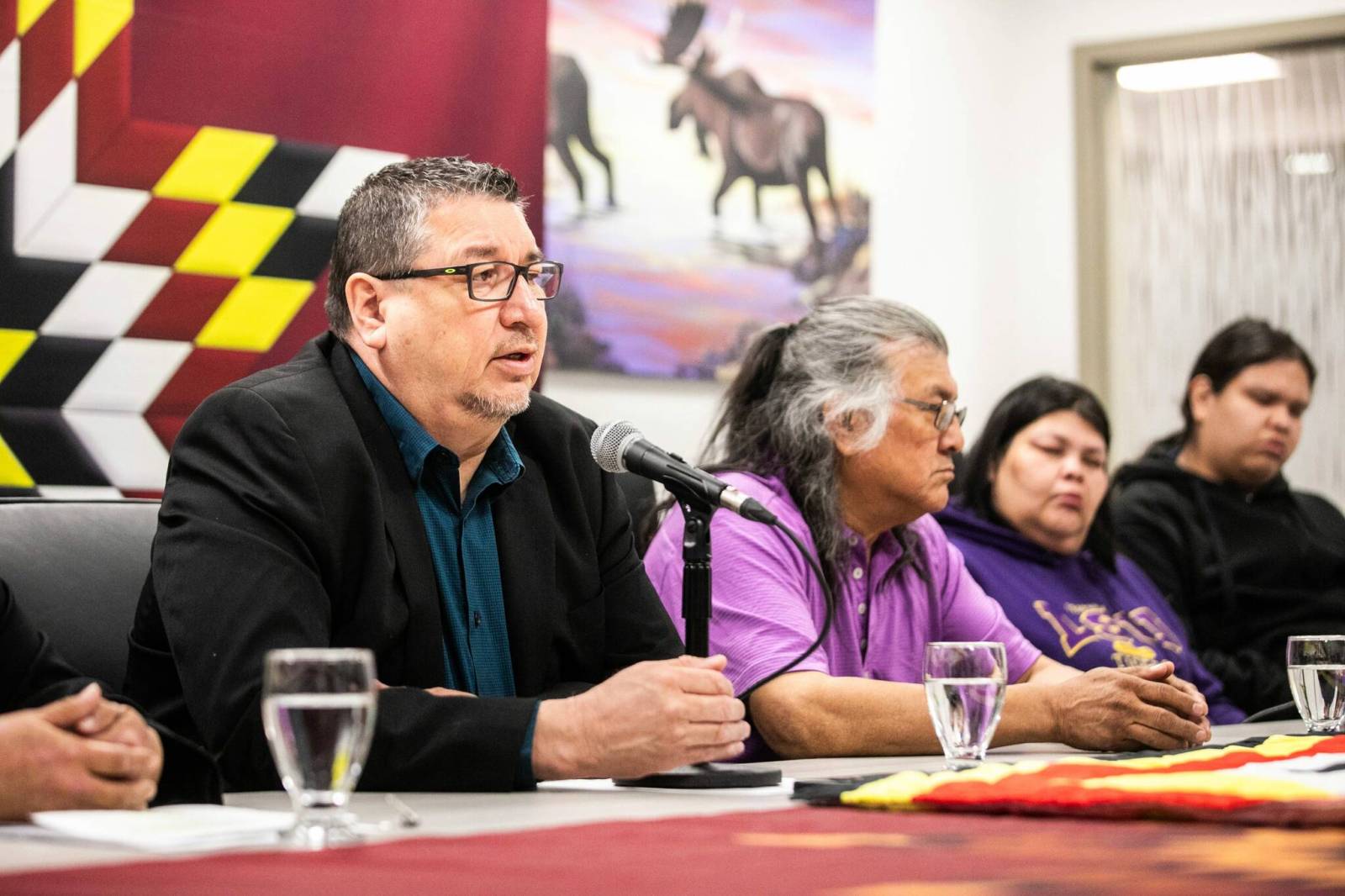
First Nations chiefs from across the country have unanimously passed an emergency resolution that calls on the federal government to criminalize residential school denialism as hate speech. The resolution was adopted Tuesday at the Assembly of First Nations annual general assembly in Ottawa. It was introduced by David Monias, chief of Pimicikamak Cree Nation in Manitoba and seconded by Manitoba Keewatinowi Okimakanak Grand Chief Garrison Settee.
“We must honour the survivors and we must honour every child who never came home,” Monias said Wednesday. “We must also support every person who was left behind and those children who never returned home. We are left to mourn those children.
They would have been our grandfathers today, our grandparents.” The federal government estimates about 150,000 Indigenous children attended residential schools. Settee said the situation needs “dire attention.”
“It is a shame to live in a country that will not protect our people from hate crimes,” he said Wednesday. “Today, the country that we live in perpetuates hate crimes because they refuse to make it a crime for people to deny residential schools existed... they condone it.
And this is not acceptable to our people, to our survivors and those that did not survive. We should be ashamed as a country... this is genocide.”
The resolution states that governments and policing authorities were complicit in the forced removal of First Nations children through the residential school system, including amendments to the Indian Act in 1920 that made attendance mandatory. Chiefs are calling on Ottawa to address that legacy by recognizing residential school denialism as hate speech under federal law. Their call follows the Senate’s decision in June to reject a proposed amendment to Bill C-9 that had been approved by the Senate’s human rights committee.
Monias referred to it as a “shame” on the Senate on Wednesday. “The government should stop hurting us, stop hurting our people,” he said. “Denialism seeks to minimize, distort and deny the harm of residential schools.
That’s what the Senate did... it undermines reconciliation and re-traumatizes families.” The legislation received royal assent in June. Amendments would require a full legislative process, which could takes months or years.
At the time, AFN National Chief Cindy Woodhouse Nepinak called the Senate’s decision “regressive and a setback for survivors and for reconciliation.” The resolution also calls for the creation of an independent complaints commission to address residential school denialism and hate speech directed at survivors, their families and First Nations communities. Monias said he has experienced denialism firsthand.
Last fall, while speaking about residential schools and reconciliation at the University of Winnipeg, former Mount Royal University professor and residential school denier Frances Widdowson protested outside with a small group of supporters. “That was really concerning, and people were saying to be careful when you go out there,” Monias said. “It was very disturbing to see that happen.”
Rebecca Chartrand, who is Manitoba’s only federal cabinet minister, said Wednesday she welcomes the resolution, saying it reflects the urgency many First Nations communities continue to feel because of the lasting impacts of residential schools. “The denialism re-traumatizes a lot of our survivors,” said Chartrand, whose family is from Pine Creek First Nation. “It undermines the good work we’ve been doing on reconciliation.”
The Churchill—Keewatinook Aski MP, who is the federal northern and Arctic affairs minister, said stronger education should be part of the response alongside changes to the Criminal Code. “Which is why the work that our Indigenous leaders are doing on this is is so important,” said Chartrand, whose father attended a residential day school. “They’re keeping it in the public eye and it keeps us talking about the harms of denialism.”
Last fall, NDP MP Leah Gazan tabled a private member’s bill aimed at adding a Criminal Code offence for willfully condoning hatred against Indigenous peoples, including denying the harms caused by the residential school system. It awaits its second reading in the House of Commons. scott.billeck@freepress.mb.ca
Scott Billeck is a general assignment reporter for the Free Press. A Creative Communications graduate from Red River College, Scott has more than a decade’s worth of experience covering hockey, football and global pandemics. He joined the Free Press in 2024.
Read more about Scott. Every piece of reporting Scott produces is reviewed by an editing team before it is posted online or published in print — part of the Free Press‘s tradition, since 1872, of producing reliable independent journalism. Read more about Free Press’s history and mandate, and learn how our newsroom operates.
Our newsroom depends on a growing audience of readers to power our journalism. If you are not a paid reader, please consider becoming a subscriber. Our newsroom depends on its audience of readers to power our journalism.
Thank you for your support.
- Published
- Jul 15, 2026
- Updated
- Jul 15, 2026
- Source
- Winnipeg Free Press
- Category
- Politics
- Read time
- 4 min
Key facts
Why this matters locally
This politics story matters locally because it may affect readers, businesses, commuters, families, or public services in British Columbia.
Local impact
BC Post links this item to British Columbia coverage so readers can follow related city updates, weather, traffic, events, and category news in one place.
Timeline
Source and credit
BC Post may summarize, organize, and add local context for reader clarity. Original reporting remains with the listed publisher.
Related Articles
View all Politics
Powerful pro-life ad featuring boxing legend to air during final World Cup matches
Politics
Powerful pro-life ad featuring boxing legend to air during final World Cup matches
 Politics
Vaughn Palmer: David Eby's slow and expensive step toward involuntary care
Politics
Vaughn Palmer: David Eby's slow and expensive step toward involuntary care
 Politics
Pitt Meadows to host information session for city council candidates
Politics
Pitt Meadows to host information session for city council candidates
 Politics
Hundreds of enthusiatic supporters attend Surrey Mayor Brenda Locke’s fundarising dinner
Politics
Hundreds of enthusiatic supporters attend Surrey Mayor Brenda Locke’s fundarising dinner
 Politics
One hundred affordable housing units for seniors coming to Sherbrooke
Politics
One hundred affordable housing units for seniors coming to Sherbrooke
 Politics
‘No consequences’: East Van woman says she was targeted by hate-motivated assault
Politics
‘No consequences’: East Van woman says she was targeted by hate-motivated assault
More Local Coverage
Latest news Business
AI Market Trends: Q2 2026 Review and Forecast
Business
AI Market Trends: Q2 2026 Review and Forecast
 Local News
Cowichan sports shorts: rugby, hockey, biking
Local News
Cowichan sports shorts: rugby, hockey, biking