

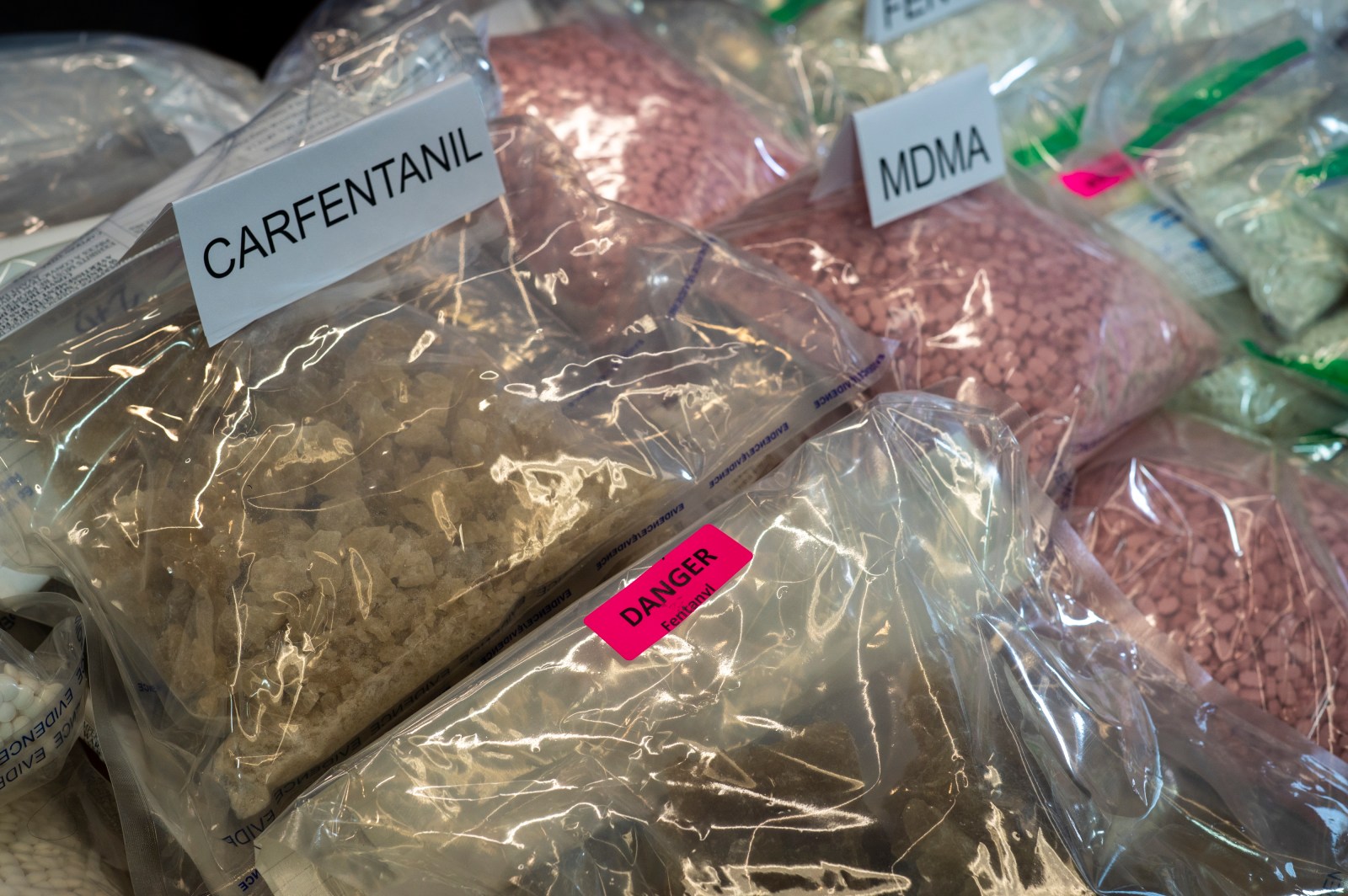
MONTRÉAL - Montreal's regional public health department is sounding the alarm over a significant rise in overdoses linked to fentanyl use, as well as several fatal overdoses involving carfentanil.
Montreal public health warns of rise in overdoses linked to fentanyl and carfentanil To continue reading, please subscribe: Digital Subscription One year of digital access for only $205* - Enjoy unlimited reading on winnipegfreepress.com - Read the E-Edition, our digital replica newspaper - Access News Break, our award-winning app - Play interactive puzzles To continue reading, please subscribe: Add Free Press access to your Brandon Sun subscription for only an additional $1 for the first 4 weeks* MONTRÉAL – Montreal’s regional public health department is sounding the alarm over a significant rise in overdoses linked to fentanyl use, as well as several fatal overdoses involving carfentanil.
The health department says paramedics have administered naloxone medication more than 925 times since the start of the year, which is 25 times more than in all of 2025. Naloxone blocks the body’s receptors that absorb opioids such as fentanyl, heroin, morphine, and oxycodone, and its use by paramedics is considered an indicator of overdose trends. The department says in addition to the growing number of non-fatal overdoses, fatal overdoses involving carfentanil are a cause for public health concern.
Eight deaths linked to carfentanil have been recorded since April 9. Carfentanil is a synthetic opioid similar to fentanyl, but 100 times more potent. An amount smaller than the weight of a grain of salt can be fatal.
In terms of overdoses, “we’ve reached the same figures at the halfway point of the year that we reached by the end of 2025. And it’s continuing, so it’s concerning,” said Dr. David Kaiser, the Montreal regional public health department’s deputy medical director. He urged drug users to not use alone, and is asking people who are around them to carry naloxone and to know how to use it.
Kaiser is also asking members of the public to intervene if they see someone who appears to be struggling to breathe, unresponsive, or who appears to be in an “altered state.” They can give naloxone if they have it, and should call 911 as soon as possible, he said. This report by The Canadian Press was first published July 16, 2026.
- Published
- Jul 16, 2026
- Updated
- Jul 16, 2026
- Source
- Winnipeg Free Press
- Category
- Entertainment
- Read time
- 2 min
Key facts
Why this matters locally
This entertainment story matters locally because it may affect readers, businesses, commuters, families, or public services in British Columbia.
Local impact
BC Post links this item to British Columbia coverage so readers can follow related city updates, weather, traffic, events, and category news in one place.
Timeline
Source and credit
BC Post may summarize, organize, and add local context for reader clarity. Original reporting remains with the listed publisher.
Related Articles
View all Entertainment
Tom Cruise unrecognizable with a gut and grey hair in ‘Digger’ trailer
Entertainment
Tom Cruise unrecognizable with a gut and grey hair in ‘Digger’ trailer
 Entertainment
Kultrun World Music Festival visits Waterloo Park
Entertainment
Kultrun World Music Festival visits Waterloo Park
 Entertainment
Langley’s tbird hosts country music concert
Entertainment
Langley’s tbird hosts country music concert
 Entertainment
Information sessions for national artistic funding set to be held at EA Rawlinson
Entertainment
Information sessions for national artistic funding set to be held at EA Rawlinson
 Entertainment
17 Xbox Game Pass title updates you might've missed this week
Entertainment
17 Xbox Game Pass title updates you might've missed this week
 Entertainment
Chilliwack artist shares how sketches evolve into ‘explosion of colour’ in solo show
Entertainment
Chilliwack artist shares how sketches evolve into ‘explosion of colour’ in solo show
More Local Coverage
Latest news Politics
Powerful pro-life ad featuring boxing legend to air during final World Cup matches
Politics
Powerful pro-life ad featuring boxing legend to air during final World Cup matches
 Business
AI Market Trends: Q2 2026 Review and Forecast
Business
AI Market Trends: Q2 2026 Review and Forecast