

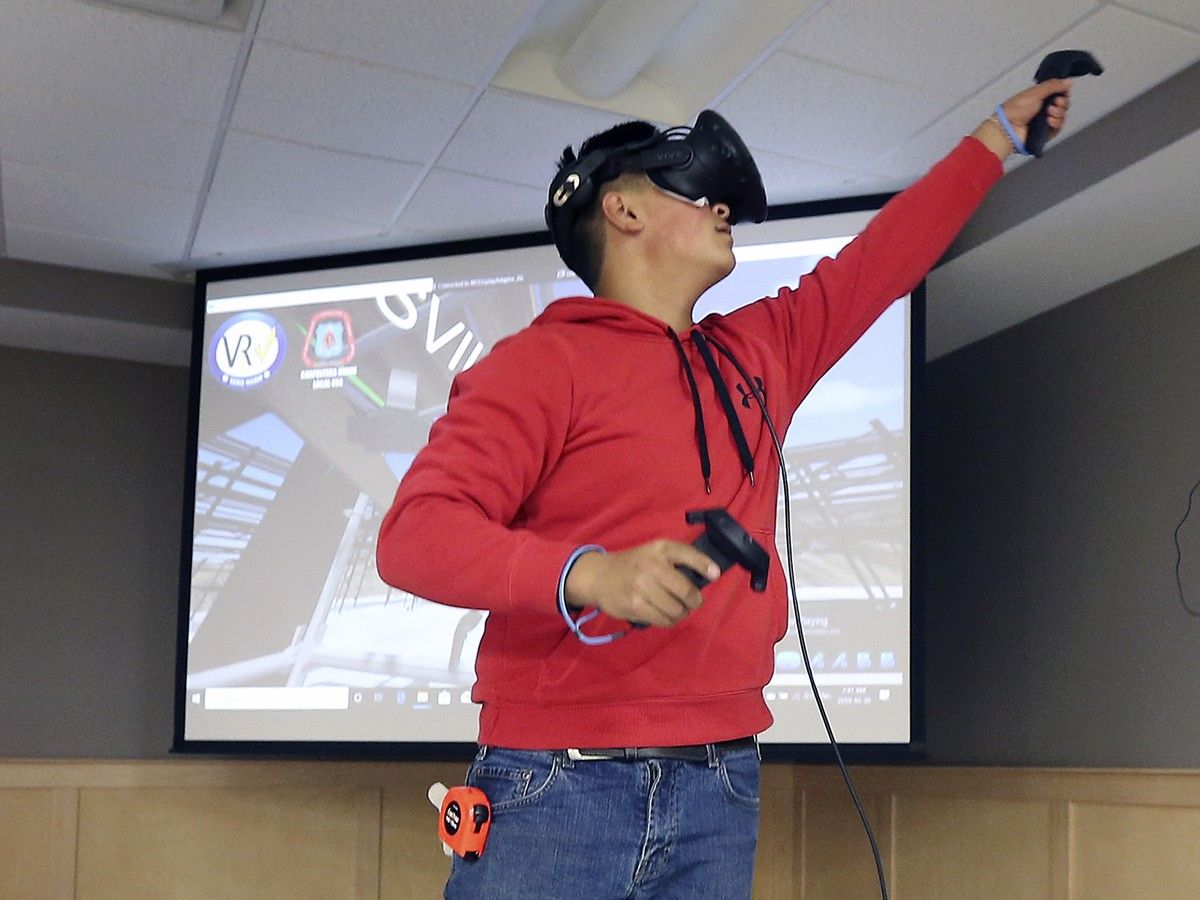
Virtual Trades has simulation-based training in 16 trades
An Alberta-based technology company is betting virtual reality can help address one of the province’s biggest workforce challenges. Virtual Trades Inc. officially launched Wednesday, offering immersive, simulation-based skilled trades training designed to help employers, unions and training providers prepare more workers for careers in the construction industry. The company says its training platform, delivered in partnership with Austin, Texas-based Interplay Learning, is designed to complement traditional apprenticeship and classroom instruction by allowing learners to practice skills in a virtual environment before stepping onto a job site.
“We are bringing immersive trades training to Western Canada so employers, educators, unions and community partners can build capability faster, improve safety, and create stronger pathways into the skilled construction trades,” said founder Shaun Went. Virtual Trades offers simulation-based training across 16 core trades, including plumbing, electrical and HVAC, as well as construction safety courses. Learners can access the training using virtual reality headsets, laptops or tablets, allowing them to build skills and confidence without the cost of physical training facilities or adding on-site risk, the company says.
Went said the virtual reality component bolsters learning retention by requiring learners to physically complete tasks rather than simply watching instructional material. “You actually have to move around (and) action certain tasks,” he said. “That really is a game changer.
“The VR, for me personally, is where we really win.” The goal is to address Alberta’s skilled labor woes by increasing training efficiency, reducing learning curves and enhancing safety and worker competency, according to Went. “This is about more than technology.
It is about expanding access, accelerating readiness and helping more people succeed in high-demand careers that are essential to our economy and our communities,” he said. Went added the platform is designed to make training more accessible by allowing users to complete lessons whenever and wherever it fits into their schedules. “To be able to deliver a course that learners are able to do in their living room prior to arriving on site, or after they put their kids to bed, was really an important part of breaking down some barriers to entry,” he said.
“It allows people to learn and develop their own skills, and increase their net worth as as professionals.” Went said the idea for the company grew out of his own experience after immigrating to Canada. A welder by trade, he found it difficult to transfer his credentials and navigate the Red Seal certification process.
“It was a pain point because I wanted to get (the) paper, and I couldn’t get it because the current Red Seal obligations are very hard to navigate as a newcomer,” he said. While Virtual Trades does not provide accreditation or replace apprenticeship programs, Went said the platform is intended to complement existing training by giving apprentices opportunities to practice tasks they may not regularly perform on the job. The launch comes as governments and industry grapple with growing labour shortages in the skilled trades in Alberta and across Canada.
In April, Prime Minister Mark Carney announced a $6-billion, five-year initiative aimed at recruiting, training and hiring up to 100,000 skilled trades workers nationwide. The federal government estimates Canada will need more than 1.4 million new trades workers by 2033 to build housing, expand transit systems and develop energy infrastructure. In Alberta, BuildForce Canada has projected the construction industry will required roughly 59,000 new workers by 2034.
It is estimated about 43,400 of Alberta’s skilled trades workers are expected to retire by that time, with a projected shortfall of about 15,400 workers.
- Published
- Jul 15, 2026
- Updated
- Jul 15, 2026
- Source
- Calgary Herald
- Category
- Politics
- Read time
- 3 min
Key facts
Why this matters locally
This politics story matters locally because it may affect readers, businesses, commuters, families, or public services in British Columbia.
Local impact
BC Post links this item to British Columbia coverage so readers can follow related city updates, weather, traffic, events, and category news in one place.
Timeline
Source and credit
BC Post may summarize, organize, and add local context for reader clarity. Original reporting remains with the listed publisher.
Related Articles
View all Politics
Powerful pro-life ad featuring boxing legend to air during final World Cup matches
Politics
Powerful pro-life ad featuring boxing legend to air during final World Cup matches
 Politics
Vaughn Palmer: David Eby's slow and expensive step toward involuntary care
Politics
Vaughn Palmer: David Eby's slow and expensive step toward involuntary care
 Politics
Pitt Meadows to host information session for city council candidates
Politics
Pitt Meadows to host information session for city council candidates
 Politics
Hundreds of enthusiatic supporters attend Surrey Mayor Brenda Locke’s fundarising dinner
Politics
Hundreds of enthusiatic supporters attend Surrey Mayor Brenda Locke’s fundarising dinner
 Politics
One hundred affordable housing units for seniors coming to Sherbrooke
Politics
One hundred affordable housing units for seniors coming to Sherbrooke
 Politics
‘No consequences’: East Van woman says she was targeted by hate-motivated assault
Politics
‘No consequences’: East Van woman says she was targeted by hate-motivated assault
More Local Coverage
Latest news Business
AI Market Trends: Q2 2026 Review and Forecast
Business
AI Market Trends: Q2 2026 Review and Forecast
 Local News
Cowichan sports shorts: rugby, hockey, biking
Local News
Cowichan sports shorts: rugby, hockey, biking