

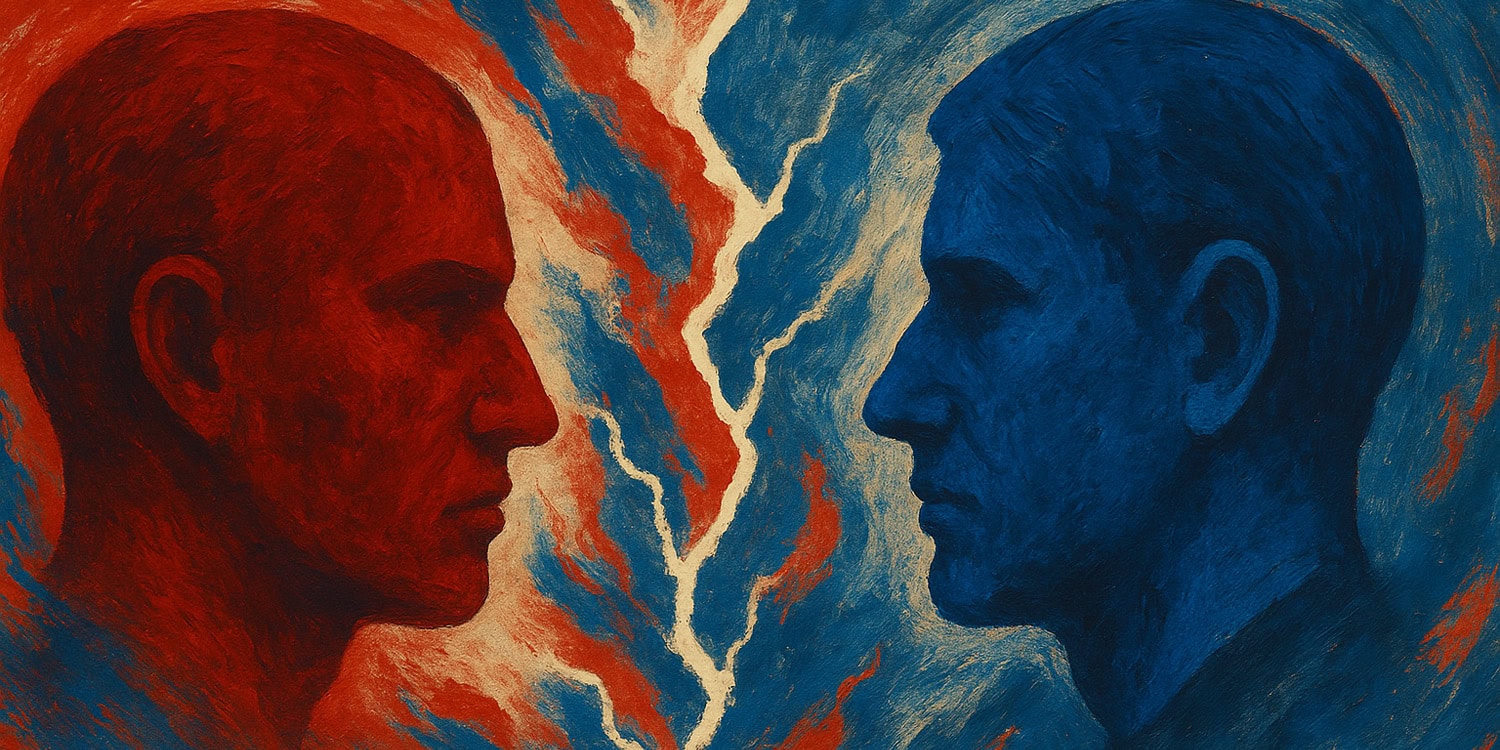
Political beliefs now dictate more than just voting habits. Recent research reveals that our partisan identities actively shape how we interpret smiles, manage our moral boundaries, and even decide how many children to have.
Political ideologies now permeate nearly every aspect of human life. Recent psychological and demographic research suggests that a person’s partisan identity influences behaviors far beyond the voting booth. Our political affiliations correlate with everything from how we interpret a simple smile to how many children we choose to have.
At the same time, the institutions and platforms that shape public discourse are evolving rapidly. Elected officials increasingly use digital networks to broadcast anger, while ordinary citizens find themselves unable to distinguish real political speech from text generated by artificial intelligence. Old assumptions about race, education, and political independence are also facing scrutiny as massive new datasets emerge.
The nine peer-reviewed studies detailed below provide evidence of a rapidly changing American electorate. They highlight how underlying psychological traits, shifting demographics, and modern communication tools actively rewrite the rules of civic engagement. Together, this research offers a detailed look at the unseen forces guiding human behavior in a highly polarized era.
The Political Realignment of America: Education Overtakes Race An analysis of survey data spanning five presidential election years suggests that the main dividing lines in American politics are changing. Ideological differences between racial groups have decreased sharply since 2008.
At the same time, differences based on a person’s level of education have grown substantially. This shift occurred partly because Black and Hispanic respondents became more conservative on average. In addition, individuals with a high school diploma or less shifted toward conservatism across all racial groups.
Participants with college and graduate degrees became more liberal during this same period. The study
Source and reference
authors analyzed answers from over 250,000 respondents using data from the Cooperative Election Study. Participants answered questions on topics like taxes, healthcare, and immigration to measure their place on the liberal-conservative spectrum. The results indicate that education is now a highly prominent ideological divider in the United States. Viral Heatmap Gets It Wrong: Liberals Don’t Prioritize Strangers Over Family A viral chart circulating on social media previously claimed that political liberals care more about strangers and animals than their own family members. A new psychological study tested this idea and found no evidence of an inverted moral hierarchy on the political left. Instead, the research suggests that liberals simply extend their moral concern further outward while still prioritizing those closest to them. Scientists use the concept of a moral circle to...
Read original source- Published
- Jul 12, 2026
- Updated
- Jul 12, 2026
- Source
- Psypost - Psychology News
- Category
- Politics
- Read time
- 8 min
Key facts
Why this matters locally
This politics story matters locally because it may affect readers, businesses, commuters, families, or public services in British Columbia.
Local impact
BC Post links this item to British Columbia coverage so readers can follow related city updates, weather, traffic, events, and category news in one place.
Timeline
Source and credit
BC Post may summarize, organize, and add local context for reader clarity. Original reporting remains with the listed publisher.
Related Articles
View all Politics
Powerful pro-life ad featuring boxing legend to air during final World Cup matches
Politics
Powerful pro-life ad featuring boxing legend to air during final World Cup matches
 Politics
Vaughn Palmer: David Eby's slow and expensive step toward involuntary care
Politics
Vaughn Palmer: David Eby's slow and expensive step toward involuntary care
 Politics
Corus rebuts misinformation about future of Global News in Alberta after layoffs
Politics
Corus rebuts misinformation about future of Global News in Alberta after layoffs
 Politics
Traditional Catholic response to Cupich’s suicide distortion
Politics
Traditional Catholic response to Cupich’s suicide distortion
 Politics
Pitt Meadows to host information session for city council candidates
Politics
Pitt Meadows to host information session for city council candidates
 Politics
Bell: Bike lane clash in Edmonton, is Calgary next in line for a fight?
Politics
Bell: Bike lane clash in Edmonton, is Calgary next in line for a fight?
More Local Coverage
Latest news Business
AI Market Trends: Q2 2026 Review and Forecast
Business
AI Market Trends: Q2 2026 Review and Forecast
 Local News
Cowichan sports shorts: rugby, hockey, biking
Local News
Cowichan sports shorts: rugby, hockey, biking