

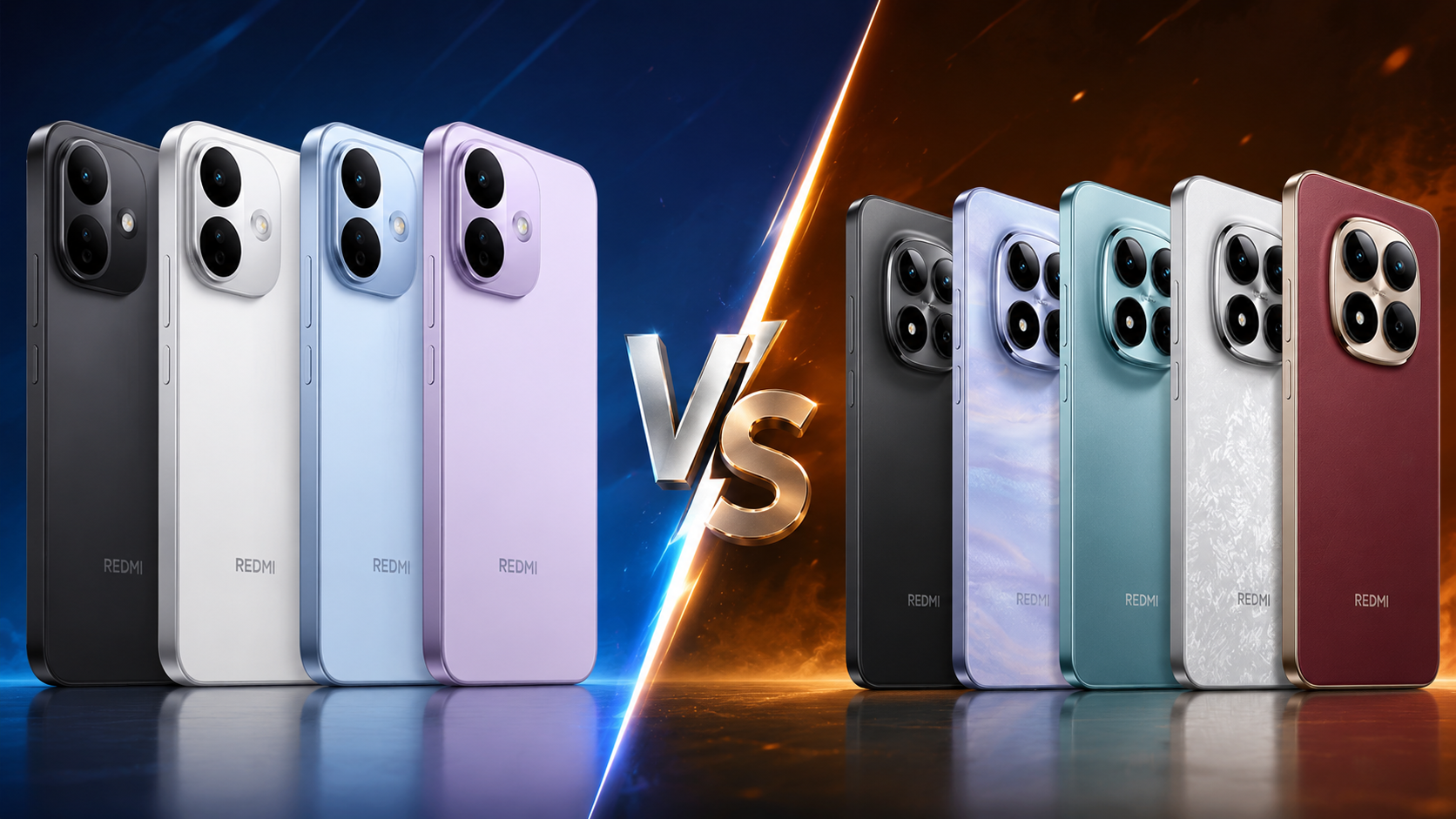
Redmi has just unveiled the Redmi Note 17 Pro as the successor to last year’s Redmi Note 15 Pro. There is speculation that the Note 17 Pro heading to the global market in the coming months could be identical to the Chinese variant, with the battery likely being the main difference. Instead of delivering incremental [...] The post Redmi Note 17 Pro vs Redmi Note 15 Pro: Know What’s Upgraded, Downgraded, and Unchanged appeared first on Gizmochina .
Redmi has just unveiled the Redmi Note 17 Pro as the successor to last year’s Redmi Note 15 Pro . There is speculation that the Note 17 Pro heading to the global market in the coming months could be identical to the Chinese variant, with the battery likely being the main difference . Instead of delivering incremental improvements across every area, Redmi has shifted its priorities this generation by reallocating internal space and manufacturing costs.
A closer look at the official specifications reveals exactly where the upgrades and compromises have been made, helping buyers decide whether the new model better suits their everyday needs. Redmi Note 17 Pro vs Redmi Note 15 Pro What’s upgraded The biggest improvements on the Redmi Note 17 Pro revolve around battery life, durability, charging, and storage performance. Rather than chasing a slimmer profile, Redmi has focused on delivering a long-lasting device with stronger protection and faster everyday performance.
Massive Battery Upgrade: Battery capacity increases dramatically from 7000mAh to 9000mAh, promising significantly longer usage and multi-day battery life under demanding workloads. Faster Charging: Wired charging has been upgraded from 45W to 67W, helping reduce charging times despite the much larger battery. Improved Storage: The 256GB and 512GB variants move from UFS 2.2 to UFS 3.1 storage, delivering faster app loading, file transfers, and multitasking performance.
Stronger Display Protection: Redmi replaces its previous proprietary glass with Corning Gorilla Glass Victus 2, offering better drop resistance. Newer Software: The phone ships with Xiaomi HyperOS 3 instead of HyperOS 2, bringing the latest software optimizations.
Higher Touch Sampling: Peak touch sampling increases from 2560Hz to 3200Hz in supported scenarios, improving touch responsiveness. What’s downgraded Accommodating a 9000mAh battery while keeping pricing competitive has resulted in noticeable compromises, particularly in the camera system, wireless connectivity, and portability. Simplified Camera System: The main camera changes from the larger 1/1.95-inch Sony LYT-600 sensor to a smaller 1/2.76-inch Samsung S5KJNS sensor, reducing low-light performance.
The 8MP ultra-wide camera has also been removed in favor of a basic 2MP depth sensor. Reduced Selfie and Video Capabilities: The front camera drops from 20MP to 8MP. Video recording is now limited to 1080p at 30fps, losing the previous model’s 4K recording and 60fps support.
Connectivity Downgrade: Wireless connectivity steps back from Wi-Fi 6 and Bluetooth 5.4 to Wi-Fi 5 and Bluetooth 5.1. Larger and Heavier Body: Thickness increases from 7.78mm to 8.46mm, while weight rises to 226 grams due to the much larger battery. Lower Performance Ceiling: Redmi has swapped the older MediaTek Dimensity 7400-Ultra to the Qualcomm Snapdragon 6s Gen 4 platform.
This chip runs at a lower maximum clock rate of 2.4GHz compared to the older chip’s 2.6GHz peak, while the absolute maximum RAM option is capped at 12GB instead of offering the 16GB tier available on the previous generation. What’s unchanged Despite the redesign, Redmi has retained several key features that define the Note Pro series, ensuring the overall user experience remains familiar. Same Display: Both phones feature a 6.83-inch 1.5K AMOLED flat display with a 2772 × 1280 resolution, a 120Hz refresh rate, and 3840Hz PWM dimming.
Same Durability Ratings: The comprehensive IP66, IP68, IP69, and IP69K water and dust resistance certifications remain unchanged. 22.5W Reverse Charging: Both devices support 22.5W wired reverse charging, allowing them to power other compatible devices. Core Features Retained: Stereo speakers, NFC, an infrared blaster, and an optical in-display fingerprint scanner continue to be part of the package.
Final Thoughts The Redmi Note 17 Pro represents a different approach rather than a straightforward upgrade. Its biggest strengths are the huge 9000mAh battery, faster charging, improved storage, stronger display protection, and newer software. However, these gains come at the expense of camera quality, wireless connectivity, recording capabilities, portability, and peak hardware performance.
If your priority is exceptional battery life, durability, and reliable day-to-day endurance, the Redmi Note 17 Pro is the stronger choice. On the other hand, users who value better cameras, lighter ergonomics, faster wireless standards, and more versatile video recording may still find the Redmi Note 15 Pro to be the more balanced smartphone. For more daily updates, please visit our News Section .
Stay ahead in tech! Join our Telegram community and sign up for our daily newsletter of top stories. The post Redmi Note 17 Pro vs Redmi Note 15
Pro: Know What’s Upgraded, Downgraded, and Unchanged appeared first on Gizmochina .
- Published
- Jul 14, 2026
- Updated
- Jul 14, 2026
- Source
- Gizmochina
- Category
- Technology
- Read time
- 3 min
Key facts
Why this matters locally
This technology story matters locally because it may affect readers, businesses, commuters, families, or public services in British Columbia.
Local impact
BC Post links this item to British Columbia coverage so readers can follow related city updates, weather, traffic, events, and category news in one place.
Timeline
Source and credit
BC Post may summarize, organize, and add local context for reader clarity. Original reporting remains with the listed publisher.
Related Articles
View all Technology
Transformer-manufacturing company to shut down its Chilliwack facility
Technology
Transformer-manufacturing company to shut down its Chilliwack facility
 Technology
Spectro Cloud Raises $100 Million Series D to Help Customers Move AI Infrastructure Into Production Across Enterprise, Public Sector, Neocloud and Sovereign Cloud Environments
Technology
Spectro Cloud Raises $100 Million Series D to Help Customers Move AI Infrastructure Into Production Across Enterprise, Public Sector, Neocloud and Sovereign Cloud Environments
 Technology
Quebec announces plan to train more aerospace workers as demand surges
Technology
Quebec announces plan to train more aerospace workers as demand surges
 Technology
Apple’s Lawsuit Could Choke OpenAI’s iPhone Rival Before It Even Ships
Technology
Apple’s Lawsuit Could Choke OpenAI’s iPhone Rival Before It Even Ships
 Technology
ECT Reprograms Adult Neurons into a Youthful State
Technology
ECT Reprograms Adult Neurons into a Youthful State
 Technology
GO train users could face delays, cancellations due to ‘crew constraints’: Metrolinx
Technology
GO train users could face delays, cancellations due to ‘crew constraints’: Metrolinx
More Local Coverage
Latest news Business
AI Market Trends: Q2 2026 Review and Forecast
Business
AI Market Trends: Q2 2026 Review and Forecast
 Politics
Powerful pro-life ad featuring boxing legend to air during final World Cup matches
Politics
Powerful pro-life ad featuring boxing legend to air during final World Cup matches