


When you factor in the humidity, the federal weather agency says, it could feel as hot as 45 C at its peak.
Southwestern Ontario heat wave: Region primed to cook — yet again Advisory is expected to be in place until Wednesday night or Thursday morning It’s been really hot so far this summer across southwestern Ontario — and that’s going to continue this week. The Windsor-Essex, Chatham-Kent and Sarnia-Lambton region is under a yellow heat warning that was put in place by Environment Canada. It’s anticipated the alert will be in effect from Monday until either Wednesday night or Thursday morning.
With it comes expected temperatures anywhere from 30 to 37 C, and minimum temperatures of 20 to 24. When you factor in the humidity, the federal weather agency says it could feel as hot as 45 C at its peak. Monday’s forecast is sunshine and highs around 33 — feeling more like 37.
“Hot and humid air can also bring deteriorating air quality and can result in the Air Quality Health Index approaching the high-risk category,” Environment Canada said. “Take action to protect yourself and others – extreme heat can affect everyone’s health. Determine if you or others around you are at greater risk of heat illness.
Check on older adults, those living alone and other at-risk people in-person or on the phone multiple times a day.” The weather agency says it’s important to watch for early signs of heat exhaustion which could include headache, nausea, dizziness, thirst, dark urine and intense fatigue. “If you, or someone around you, is showing signs of heat stroke which can include red and hot skin, dizziness, nausea, confusion and change in consciousness.
While you wait for medical attention, try to cool the person by moving them to a cool place, removing extra clothing, applying cold water or ice packs around the body.” Drink water often and before you feel thirsty to replace fluids, Environment Canada added, while suggesting people close blinds or shades, and open windows if outside is cooler than inside. “Turn on air conditioning, use a fan, or move to a cooler area of your living space.
If your living space is hot, move to a cool public space such as a cooling centre, community centre, library or shaded park.”
- Published
- Jul 13, 2026
- Updated
- Jul 13, 2026
- Source
- Cbc
- Category
- Environment
- Read time
- 2 min
Key facts
Why this matters locally
This environment story matters locally because it may affect readers, businesses, commuters, families, or public services in British Columbia.
Local impact
BC Post links this item to British Columbia coverage so readers can follow related city updates, weather, traffic, events, and category news in one place.
Timeline
Source and credit
BC Post may summarize, organize, and add local context for reader clarity. Original reporting remains with the listed publisher.
Related Articles
View all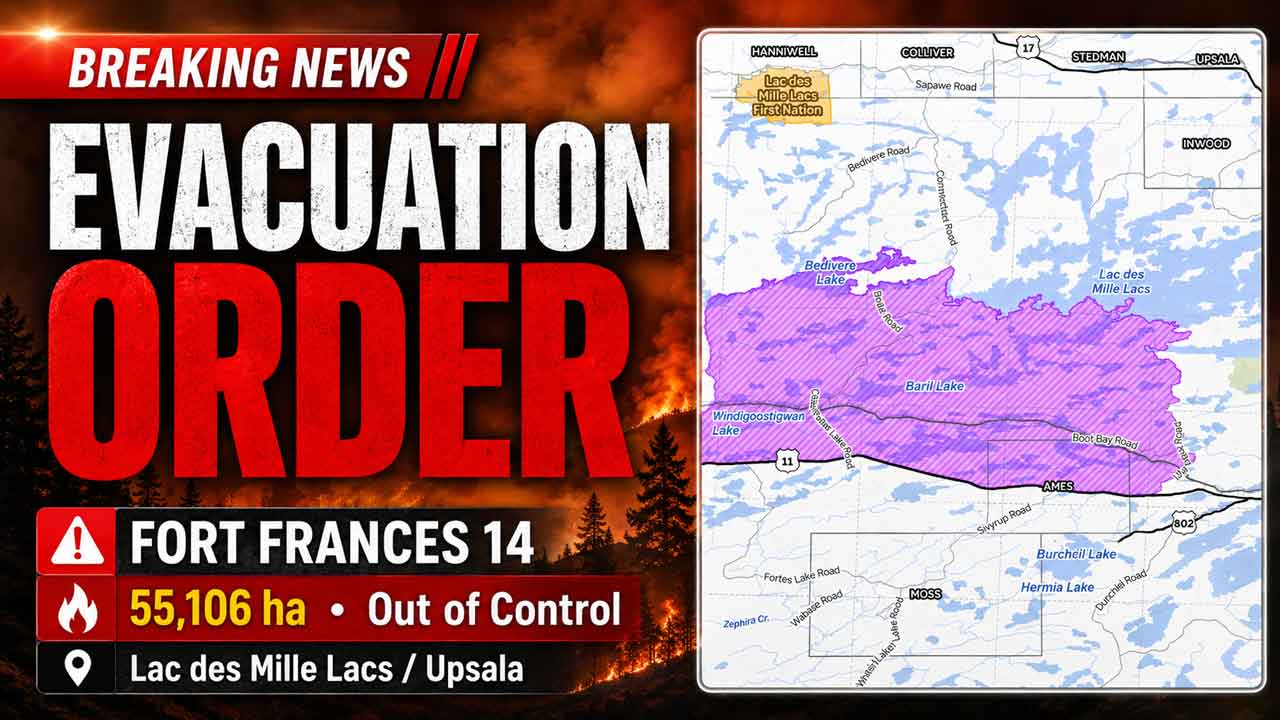 Environment
Updated Evacuation Information for Wildfire Fort Frances 14 (July 17 2026)
Environment
Updated Evacuation Information for Wildfire Fort Frances 14 (July 17 2026)
 Environment
50-hectare wildfire burns between Clearwater and 100 Mile House
Environment
50-hectare wildfire burns between Clearwater and 100 Mile House
 Environment
A powerful movement of healing arrives at Delta’s Discovery Centre
Environment
A powerful movement of healing arrives at Delta’s Discovery Centre
 Environment
2 wildfires north of Anahim Lake currently out-of-control
Environment
2 wildfires north of Anahim Lake currently out-of-control
 Environment
Port Coquitlam mayor launches program that removes graffiti on public property within 48 hours
Environment
Port Coquitlam mayor launches program that removes graffiti on public property within 48 hours
 Environment
'Fending for ourselves' after Manitoba wildfire forces evacuation: O-Pipon-Na-Piwin leaders
Environment
'Fending for ourselves' after Manitoba wildfire forces evacuation: O-Pipon-Na-Piwin leaders
More Local Coverage
Latest news Business
AI Market Trends: Q2 2026 Review and Forecast
Business
AI Market Trends: Q2 2026 Review and Forecast
 Politics
Powerful pro-life ad featuring boxing legend to air during final World Cup matches
Politics
Powerful pro-life ad featuring boxing legend to air during final World Cup matches
 Local News
Cowichan sports shorts: rugby, hockey, biking
Local News
Cowichan sports shorts: rugby, hockey, biking