

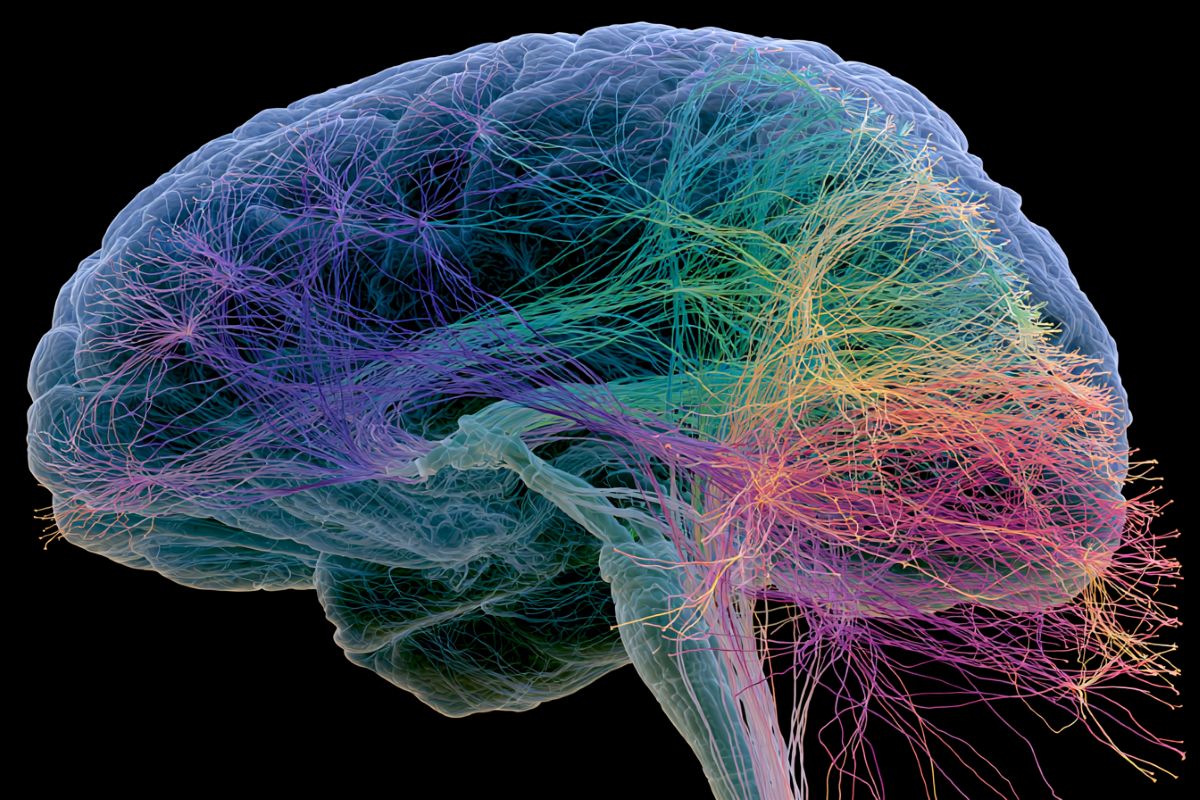
A new study combines rodent circuitry mapping with ultra-high-field 7T human fMRI to investigate periaqueductal gray (PAG) regulation.
A new study combines rodent optogenetic circuit mapping with ultra-high-field 7T human fMRI to isolate the upstream networks regulating the periaqueductal gray, establishing a biological target for real-time neurofeedback therapies in PTSD. Credit: Neuroscience News Study Maps Brain Stem Networks to Help Patients Regulate PTSD Summary: A new study combines rodent circuitry mapping with ultra-high-field 7T human fMRI to investigate periaqueductal gray (PAG) regulation. By identifying the upstream brain regions that govern this core midbrain defensive command center, the project aims to develop real-time fMRI neurofeedback therapies that enable patients with PTSD and anxiety disorders to consciously regulate their chronic hyper-arousal states.
Key Facts The Periaqueductal Gray (PAG) Epicenter: Tucked deep inside the midbrain surrounding the cerebral aqueduct, the PAG acts as the primary command station for mammalian defensive maneuvers (fight, flight, or freeze). In PTSD and anxiety disorders, the PAG functions like an unmonitored engine, running continuously without its normal regulatory brakes. The Indirect Targeting Strategy: Because the PAG is exceptionally tiny and buried deep within the brain stem, directly modulating it is difficult.
Instead, the alliance is mapping the higher-order cortical and subcortical brain regions that regulate and send inhibitory signals to the PAG. These upstream regulatory areas serve as optimal targets for therapeutic intervention. The Rodent-to-Human Translation Loop: Amsterdam (NIN): Researchers use high-precision tools (like optogenetics and calcium imaging) in mice to identify the precise cellular connections and circuits that drive fear extinction and stress control.
Maastricht (UMC): Human imaging teams use 7T fMRI to immediately verify whether these exact same neural pathways are structurally active and functioning in humans. Real-Time Neurofeedback: The ultimate goal is to build custom fMRI neurofeedback protocols. Under this paradigm, patients inside a 7T scanner receive real-time visual displays of their own upstream threat-network activity, gradually training their minds to consciously dampen overactive threat responses.
Structural Educational Mission: Beyond engineering new therapies, the alliance is actively integrating this dual-focus circuit data directly into the training curricula for early-career psychiatrists, psychologists, and clinical researchers, ensuring future clinicians understand the biological wiring behind fear.
Source and reference
Source: KNAW Why does the brain’s stress system remain stuck in overdrive for some people? Researchers at the Netherlands Institute for Neuroscience (NIN) and Maastricht UMC are joining forces to find the answer. By combining fundamental neuroscience with clinical research, they aim to better understand how the brain regulates stress and lay the groundwork for new treatments for conditions such as post-traumatic stress disorder (PTSD) and anxiety disorders. The brain’s alarm system Everyone is familiar with the body’s automatic response to danger: your heart rate increases, your muscles tense, and your body prepares to fight, flee, or freeze. In people with stress-related or anxiety disorders, however, this alarm system often remains activated even when there is no immediate threat. At the heart of the project is a tiny structure deep within the brainstem called the periaqueductal...
Read original source- Published
- Jul 14, 2026
- Updated
- Jul 14, 2026
- Source
- Neuroscience News
- Category
- Technology
- Read time
- 5 min
Key facts
Why this matters locally
This technology story matters locally because it may affect readers, businesses, commuters, families, or public services in British Columbia.
Local impact
BC Post links this item to British Columbia coverage so readers can follow related city updates, weather, traffic, events, and category news in one place.
Timeline
Source and credit
BC Post may summarize, organize, and add local context for reader clarity. Original reporting remains with the listed publisher.
Related Articles
View all Technology
Transformer-manufacturing company to shut down its Chilliwack facility
Technology
Transformer-manufacturing company to shut down its Chilliwack facility
 Technology
Asus ROG Strix XG32UQWMS review
Technology
Asus ROG Strix XG32UQWMS review
 Technology
ECT Reprograms Adult Neurons into a Youthful State
Technology
ECT Reprograms Adult Neurons into a Youthful State
 Technology
The Canadian Companies Building AI Infrastructure and Why They Matter
Technology
The Canadian Companies Building AI Infrastructure and Why They Matter
 Technology
Spectro Cloud Raises $100 Million Series D to Help Customers Move AI Infrastructure Into Production Across Enterprise, Public Sector, Neocloud and Sovereign Cloud Environments
Technology
Spectro Cloud Raises $100 Million Series D to Help Customers Move AI Infrastructure Into Production Across Enterprise, Public Sector, Neocloud and Sovereign Cloud Environments
 Technology
Apple’s Lawsuit Could Choke OpenAI’s iPhone Rival Before It Even Ships
Technology
Apple’s Lawsuit Could Choke OpenAI’s iPhone Rival Before It Even Ships
More Local Coverage
Latest news Business
AI Market Trends: Q2 2026 Review and Forecast
Business
AI Market Trends: Q2 2026 Review and Forecast
 Politics
Powerful pro-life ad featuring boxing legend to air during final World Cup matches
Politics
Powerful pro-life ad featuring boxing legend to air during final World Cup matches
 Top
‘Entire city’ asked to help search for missing 11-year-old Parker: Calgary police
Top
‘Entire city’ asked to help search for missing 11-year-old Parker: Calgary police