

Bands like The Funkin' Machine and Nu Genea bring old sounds into a new era. Read full story on the Bandcamp Daily .
With the passing of 1970s Italian disco star Pino D’Angiò in 2024, the torch was handed to a new generation of young Napoli funketeers to keep their city’s funk and disco legacy alive. These producers and musicians—groups like Nu Genea, Mystic Jungle, and The Funkin’ Machine—have a keen awareness of their folkloric past thanks to reissues and strong relationships with their elders, as reflected in their reverential songwriting, helping to usher in the next epoch of the Napoli funk scene.
While Italy in general is well-known for the Italo disco explosion in the late 1970s to early ‘80s—which gave us artists like Georgio Moroder, Hipnosis, and Kano—Naples specifically had its own, lesser known sound. Napoli funk relied heavily on the influence of American funk and jazz—think James Brown or McFadden & Whitehead—blending them with regional folk traditions, rather than the futurism of space disco. It also had no interest in courting overseas audiences by singing in English.
Napoli singers sang in Neapolitan—which is its own language, with a lot of metaphor and humor. The Funkin’ Machine, formed by Andres Balbucea in 2017 and considered a Napoli supergroup, draws heavily on the mid-‘70s style. Its members also play in groups like Nu Genea and Mystic Jungle, while Balbucea has a side project with Andrea De Fazio named Parbleu.
Balbucea describes his supergroup as speaking to “what is going on in Napoli.” He continues, “There are songs speaking about Neapolitan conditions.” The iconography of the Napoletanite cover art—the 35mm tint depicting the band’s sharply-dressed members circling a Moto Guzzi motorcycle in urban Naples—binds the modern incarnation of Napoli funk to its 1970s forebears.
Opener “Tengo Paura D”a Morte,” which translates to “fear of death,” rides the backbone of a ferocious rhythm section with minimalist guitar vamping to deepen the hypnosis. Balbucea says The Funkin’ Machine’s mutability, pulling in influences from cosmic disco, Roy Ayers, Latin funk, and even Persian funk, stems from their admiration for Napoli Centrale, a formative group from the ‘70s. “[Napoli Centrale is] considered for everybody the band that opened this style in Napoli,” Balbucea says.
The group’s 1975 self-titled debut sounds like a prog-jazz fusion channeling both the darkly cosmic side of Weather Report and the avant-garde stylings of Can. The latter’s influence becomes even more undeniable with frontman and saxophonist James Senese’s vocal outbursts, which come off like an Italian Damo Suzuki. Senese was the son of an African American World War II soldier and a Neapolitan mother who raised him alone after his father left 18 months after his birth.
Senese died of pneumonia in Naples at the age of 80 in October 2025, but his legacy still looms large in the city. Balbucea describes his singing style as “really nervous, because Napoli is a very chaotic place.” Napoli Centrale were considered one of the pioneers of the wider Naples Power Movement.
While this term is understood as more critical shorthand than artistic manifesto, historically it has stuck as a framework for a mid-‘70s era when Napoli artists incorporated American funk, jazz, and disco into their folk traditions. The Naples Power Movement produced dozens of funk and disco artists, many given a second life on Early Sounds Recordings and NG Records’ Napoli Segreta compilation series. But the movement’s biggest name was Pino D’Angiò whose 1981 record Balla!
catapulted him to international fame, and remains a staple in modern disco DJ bags. His massive single “Ma quale idea,” which borrows the “Ain’t No Stoppin’ Us Now” bassline (a comparison he refuted), looms as a collosal Naples Power monument, and D’Angiò’s brusque baritone style is imitated in songs like Donn’Anna’s “Nun Ce Sta’ Nient A Fa” and Tonica & Dominante’s “Cicogna.” The Funkin’ Machine might be a modern Napoli supergroup, but the band that made the biggest impact in this new funk era are Nu Genea.
Producers Massimo Di Lena and Lucio Aquilina have explored many funk and dance styles since the group formed in 2014—like collaborating with legendary Afrobeat drummer Tony Allen on the Tony Allen Experiments in 2016. While living in Berlin, their 2018 homage to their homeland Nuova Napoli ignited international interest in Napoli funk. Now in its fourth repress, Nuova Napoli’s synthesis of jazz-funk stylings on “Stann Fore” and booming disco backlines on “Je Vulesse” had such Napoli Power sincerity they could have been mistaken for lost relics finally finding its audience.
“Of course Nu Genea opened the streets,” Balbucea says. He even joked that Nu Genea stole his band—many Funkin’ Machine members have been session players and live performers alongside the duo. “It encouraged everybody to do more.”
They went on to blend exotica and future disco into their Neapolitan roots on their 2022 album Bar Mediterraneo, and the recently released People of the Moon has forgone the retro ties entirely in favor of a modern sheen and an international groove, with songs sung in Neapolitan, Arabic, English, Spanish, and Portuguese. While Funkin’ Machine and Nu Genea revived the Naples Power sound with modern twists, Dario Di Pace’s label Periodica is more inspired by the movement that came after that, which is named for Mount Vesuvius, the active volcano that looms over the region.
“Vesuwave” was Napoli’s own new wave movement, inspired by the American and UK sound of the ‘80s. Still rooted in funk, groups like Bisca and Little Italy emerged with synth-based music that was more Talking Heads, reggae, and Italo than jazz-funk or James Brown. Di Pace collected and reissued Little Italy’s only recordings for a 12-inch called Fragments (1983 – 1985) in 2022.
During his research, he discovered that the only single they released was a promotional 45 that came with an issue of Napoli City, a local alternative culture magazine published by his uncle. “It was a sign of destiny,” he says. “The Vesuwave heritage is very important for me.
When I think of Periodica, when I think about what kind of music I want to make, it’s more conceptual than a genre or a style.” Periodica has been active for over a decade, both reissuing rare flea market finds like “Sta Guagliona Mo Ddà” by Tonino Balsamo as well as curating new local artists like Whodamanny—a key figure in Periodica’s West Hills Studio team—Capinera, Milord, and Parbleu. West Hills Studio, run by Whodamanny, Di Pace, and Milord, has become a hub for musicians and producers, a place where Di Pace’s collection of vintage synthesizers, drum machines, and insistence in recording to tape has shaped the revivalist textures of the current sound.
The son of a journalist and well-known film set designer, Di Pace studied design and painting; music was more of a hobby. His background gives Periodica a distinct visual look—right down to the fonts on the center labels. To illustrate just how retro he is, Di Pace held up an old book he owns simply titled Fonts that he photocopies to design each record.
“Everything is totally do-it-yourself,” he says “Also with a lot of limitations. Limitations are partly conceptual and partly due to vintage equipment that we use.” Periodica is also the home to Di Pace’s own project Mystic Jungle, which has hit grail status after multiple pressings of 2022’s
Deviant Disco went out of print. With Deviant Disco, Di Pace gained international fans, as the record draws from the post-disco era in New York City in the late ‘70s and early ‘80s, when American groups were collaborating with Italians on labels like Emergency Records and partying to Larry Levan sets at Paradise Garage. Mystic Jungle continues to evolve as 2025’s Sunset Breaker sounds more New Wave meets yacht rock, while he hints that the next record will be “more visionary or cyber punk direction—[but] still connected to a retrofuturistic way of thinking,” he says.
“If you listen to the upcoming new one, it’s clear I tried to blend rock with the mutant disco and electronic elements.” That visionary perspective permeates the scene. Both DiPace and Balbucea find Parbleu difficult to define, as it brings in exploratory global sounds of Latin Tropicália blended with Afrobeat, while reggae riffs and jazz solos illustrate their virtuosity.
Parbleu worked with a French singer on their debut Danse Cette Zik, while follow-up Elios was a concept album inspired by Greek mythology and chock full of Balearic and space disco. The Greek mythos is no accident: Naples is also known as Parthenope after the Greek siren who washed ashore in Neapolis. New arrivals Lapa Dula and Pelligrino & Zodyaco have released sleek cosmic disco records on Early Sounds Recordings.
Much like Periodica, Early Sounds formed in 2018 with a reissue of a jazz-funk-meets-Italo LP from Milan’s Qvark. They eventually shifted toward a modern sound with Lapa Dula’s Agua, which feels more akin to modern funk or the boogie funk of Steve Arrington in the mid-’80s. DiPace and Balbucea both emphasize the fact that the scene is built on old friendships that go back before anyone was receiving international attention.
DiPace has known Nu Genea for nearly 20 years, and the group recorded one of their albums in West Hill for over a year. “We are constantly connected even if we do different music,” he says. More broadly, Balbucea notes, “It’s a challenge for everybody to make something original and new before the other people.
It’s not competition. It’s more to be in the scene and to play to have fun. We want to keep the momentum alive.”
- Published
- Jul 16, 2026
- Updated
- Jul 16, 2026
- Source
- Bandcamp Daily
- Category
- Entertainment
- Read time
- 7 min
Key facts
Why this matters locally
This entertainment story matters locally because it may affect readers, businesses, commuters, families, or public services in British Columbia.
Local impact
BC Post links this item to British Columbia coverage so readers can follow related city updates, weather, traffic, events, and category news in one place.
Timeline
Source and credit
BC Post may summarize, organize, and add local context for reader clarity. Original reporting remains with the listed publisher.
Related Articles
View all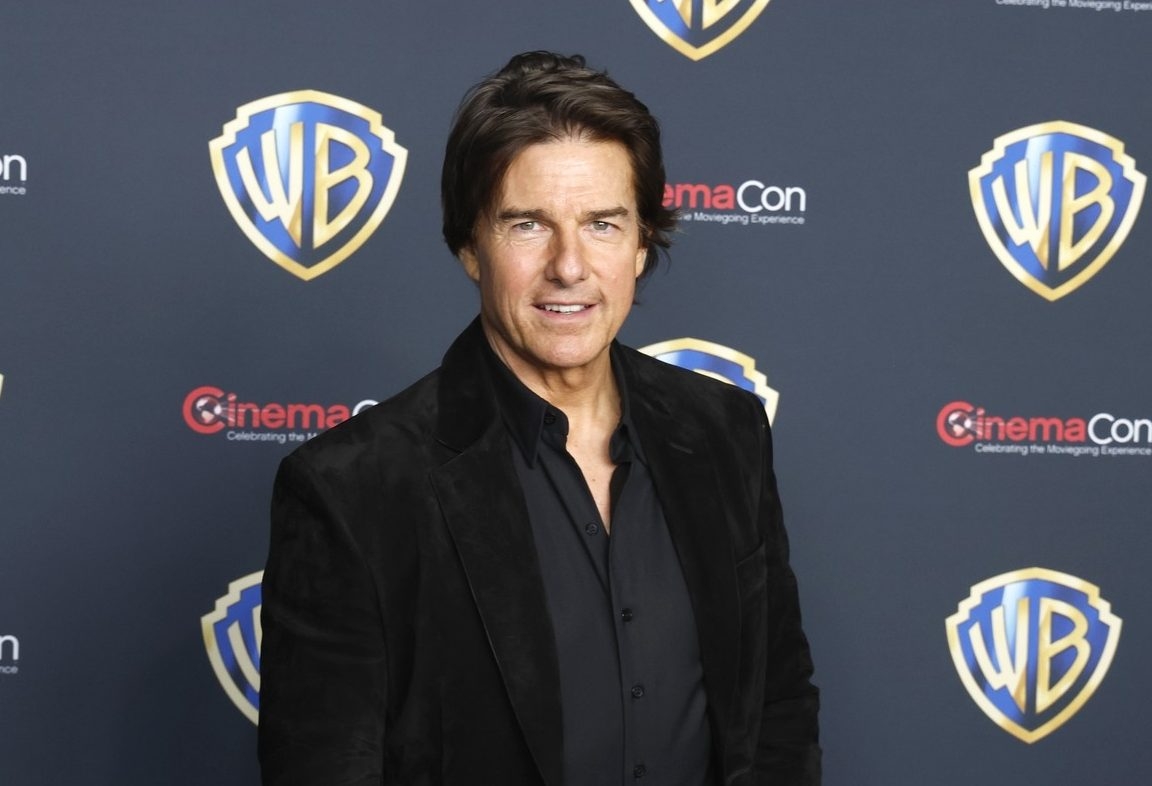 Entertainment
Tom Cruise unrecognizable with a gut and grey hair in ‘Digger’ trailer
Entertainment
Tom Cruise unrecognizable with a gut and grey hair in ‘Digger’ trailer
 Entertainment
Kultrun World Music Festival visits Waterloo Park
Entertainment
Kultrun World Music Festival visits Waterloo Park
 Entertainment
Langley’s tbird hosts country music concert
Entertainment
Langley’s tbird hosts country music concert
 Entertainment
Information sessions for national artistic funding set to be held at EA Rawlinson
Entertainment
Information sessions for national artistic funding set to be held at EA Rawlinson
 Entertainment
17 Xbox Game Pass title updates you might've missed this week
Entertainment
17 Xbox Game Pass title updates you might've missed this week
 Entertainment
Hundreds pack Maple Ridge wharf for Tragically Hip tribute
Entertainment
Hundreds pack Maple Ridge wharf for Tragically Hip tribute
More Local Coverage
Latest news Business
AI Market Trends: Q2 2026 Review and Forecast
Business
AI Market Trends: Q2 2026 Review and Forecast
 Politics
Powerful pro-life ad featuring boxing legend to air during final World Cup matches
Politics
Powerful pro-life ad featuring boxing legend to air during final World Cup matches