


The once underground and countercultural “rave” has fully spread to the mainstream in the form of themed pop-ups and sponsored parties. For newbies, it can be a sanitized gateway into electronic music. For true ravers, it’s more complicated.
On a blue-skied morning in March, gentle house music wafts from inside the Brooklyn lounge bar Superior Ingredients. When I get to the door, I flash my ticket to the bouncer and scurry past a sign that reads “WELCOME TO FRIENDSHIP” until a smiling woman with sequined UGGs chases me down for a hug. “Huh?
Oh, sure,” I say, lightly patting her shoulder. I learn she’s been hired to hug everyone at Daybreaker, the self-described sober rave I’m attending. Inside the venue’s sun room, a pre-rave yoga session is already underway.
As a mashup of Rihanna’s “Kiss It Better” and Luther Vandross’ “Never Too Much” plays over the speakers, a perky instructor guides us through 20 squat jumps. After closing with a shavasana, she shouts, “Are y’all ready to dance?!”
before a DJ in an aloha shirt throws on a tech-house remix of Fleetwood Mac’s “Dreams.” Later, a five-person band featuring a white guy slapping a giant hand drum climbs onto the stage to perform an acoustic version of “Crazy Frog.” “I haven’t felt this good in a while,” Alex, a 36-year-old from Queens, tells me mid-song.
“It’s only with friends that you can open up.” He then gives me my second unprompted sober-rave hug of the day. Once a signifier of unsanctioned parties, the word rave has never been more ubiquitous.
While there are still echoes of its subversive origins in the current Brooklyn DIY scene—warehouse nights listed with a TBA location on Resident Advisor, beach raves announced via flyers circulated on Discord—if you get sucked into the right algorithm, “rave” quickly loses meaning. Today’s mainstream offerings include sauna raves, Labubu raves, Shrek raves, and even a Trader Joe’s vs. Aldi rave, with revelers arriving “decked out in produce swag.” Unlike IYKYK events, where nocturnal freaks roam free and a gruff bouncer might threaten banishment for a dancefloor selfie, cameras are strongly encouraged.
“We’re adding to the culture of the rave community,” Daybreaker co-founder Radha Agrawal tells me. “Communities naturally evolve, rave culture evolves. Everything evolves.”
To rave is to party, but to party is not always to rave. Raving is a youth movement that has always rejected conformity. For decades, in the face of economic, social, and political decline, factions of queer, Black, and lost children have skulked around paradisal jungle gyms by way of bunkers, wild forests, and abandoned buildings, anywhere that couldn’t easily be accessed by the establishment, paving the way for punkish innovations across electronic music and fashion.
On the political spectrum, ravers lean deep left—in a society that criminalizes the use of mind-altering substances and loud music, you don’t become a promoter because you want to get rich. A great rave will more often than not barely get out of the red, only to be shut down in the first few hours. To understand the untamed nature of raves, you can review its fascinating etymology.
In the early 14th century, to rave was “to dream; wander here and there, prowl; behave madly, be crazy.” By 1989, it would be pegged as a “mass party with loud, fast electronic music, and often psychedelic drugs,” a definition still widely used today. Raving can be traced to the late 1980s, when artists like DJ Pierre and Spanky sparked a bright but short flame of acid house in Chicago clubs, manipulating synthesizers to create squelchy beats dancers could jack their bodies to.
When a police crackdown forced the scene to fizzle out, raving travelled to illegal squats in the UK, where, in 1988, in the so-called Second Summer of Love, it was framed as a rebellion to the working-class deterioration of the Thatcher era. A few years later, it journeyed back to America: In New York, Frankie Bones’ and Adam X’s Storm Raves took place in dilapidated apartments on Coney Island Avenue; in the Bay Area, a group of English DJs called Wicked threw acid-laced full-moon raves surrounded by bonfires; and in the Midwest, an abundance of open fields and warehouses in cities like Detroit and Columbus allowed raves to surge.
It experienced another Stateside boom in the 2010s, thanks to DJs like Skrillex and Deadmau5, who transformed UK dubstep into screeching dopamine hits called brostep, boosting the genre all the way to the mosh pits of America’s newly supersized EDM festivals—and, in the process, turning the idea of raving into an extremely profitable business. At the same time brostep was finding its footing, I was a teenager partying in an equally flourishing underground DIY scene in New York. The Cabaret Law, the city’s infamous Prohibition era “no-dancing” ordinance, was still in effect, which meant most off-the-grid events were clandestine and word-of-mouth.
In $20 platform sandals, I would attend sets from queer DJs like Venus X and Juliana Huxtable at experimental loft galleries in Queens and Brooklyn. By my twenties, I spent summers abroad at raves in a school gymnasium in London, in a marisquería in CDMX, and in a building in Lisbon that could only be entered by precariously climbing a wooden ladder. The most memorable raves were scrappy, long nights and mornings typically fueled by candy-colored pills that helped me work my legs until sunrise.
Not every mainstream rave in 2026 is the antithesis of underground parties past and present, but Daybreaker comes close, both in its devotion to sobriety and in how much money the organizers claim to make (the company claims to pull in seven figures annually). I later ask Agrawal about those who criticize organizations like hers—which freely use the term rave while being bolstered by handsome wellness sponsors like AG1—versus the current, primarily queer and racially marginalized underground system that can struggle to turn a profit. “It’s all about, how do you operate?”
she replies. “Are you just drinking your profits away? Are you getting high?
We’re sober. We’re serious professionals. You take it seriously, you can make more money.”
Plenty of similar parties benefit from the same big-tent communal mindset. Take the Midnight Rave at House of Yes, where attendees are giddy to support the promoters, Kseniya Sovenko and Mary Wolff, better known on social media as NYC Rave Girls. Priding themselves on rave etiquette, the two thirtysomethings promote electronic music gigs via TikTok and Instagram, preaching “girls to the front” while shimmying to polite techno.
Despite the name of their one-off event, Sovenko and Wolff both admit Midnight Rave is more of a “party” than an actual rave. “Not everything is a rave,” clarifies Sovenko. “A pop-up at a coffee shop is not a rave.
Even our parties, most of the time, are not raves.” Instead, she says, they use the word loosely to capture “the spirit of raving and the essence of it, this idea of showing up to dance and taking care of the people around you.” Indeed, during these events, I rarely spoke to a person who didn’t look like they were having the time of their life.
And many of them got what they wanted out of it: a tight-knit family, or at the very least the appearance of one. “I like that it’s really building a community,” says Paty, a 27-year-old DJ I meet in the venue’s back room. “You forget how crazy the world is so you can have fun for the night.”
Christina, a 44-year-old mother, agrees. “This is a form of self-care,” she yells to me over a booming house beat. “Some people get Botox.
I think house music is my Botox.” Conversations with people like Christina left me questioning whether this format of raving is really just a new beacon of wellness culture. Historically, the music at the raves I’ve attended tends to lean darker: techno, acid, electroclash, the kinds of sounds that rearrange your brain when you’re stomping on the concrete of a warehouse floor.
But at these new feel-good raves, maximizing your mindstate appears to be more important than the music you’re actually listening to. For example, in the 100-page Daybreaker playbook, there is one (made-up) genre underlined: happy house. “Something that you can sing along to, music with words, music that you can feel joy in your bones,” as Agrawal explains it.
For some longtime ravers, this approach isn’t much cause for concern. There’s a prevailing sentiment that as long as newcomers are going to their own raves, they aren’t going to the ones that truly matter. Yet events thrown by organizers like NYC Rave Girls have received criticism for making the scene a little too open to novice ravers, dampening the night for educated dancers who have been supporting raves for years.
“I have noticed an influx of kind of inexperienced, cis white girls showing up at parties I go to,” says Mckenzie Wark, the
Source and reference
author of Raving, an autofictional book exploring the queer rave scene in New York. While she doesn’t mind raves becoming increasingly ubiquitous, she worries that newcomers, accustomed to pop-up raves at restaurants and bathhouses, will find themselves unprepared to handle themselves at a debaucherous all-nighter. “You want it to be for everybody, but it’s like, Girl, you’re not ready for what this one is. I just want a little bit of daylight between where I want to go and where beginners are going to go. My day job is teaching people. I don’t want to do it at the party.” Sovenko, however, rejects that line of thought. “I think it’s interesting when people say that we are ‘ruining’ the crowds,” she says. “They don’t consider the fact that all the clubs in New York need to stay open. If it was truly gatekept, those spaces wouldn’t survive.” For Laura Villasenin, founder of the luxury...
Read original source- Published
- Jul 15, 2026
- Updated
- Jul 15, 2026
- Source
- Pitchfork
- Category
- Entertainment
- Read time
- 11 min
Key facts
Why this matters locally
This entertainment story matters locally because it may affect readers, businesses, commuters, families, or public services in British Columbia.
Local impact
BC Post links this item to British Columbia coverage so readers can follow related city updates, weather, traffic, events, and category news in one place.
Timeline
Source and credit
BC Post may summarize, organize, and add local context for reader clarity. Original reporting remains with the listed publisher.
Related Articles
View all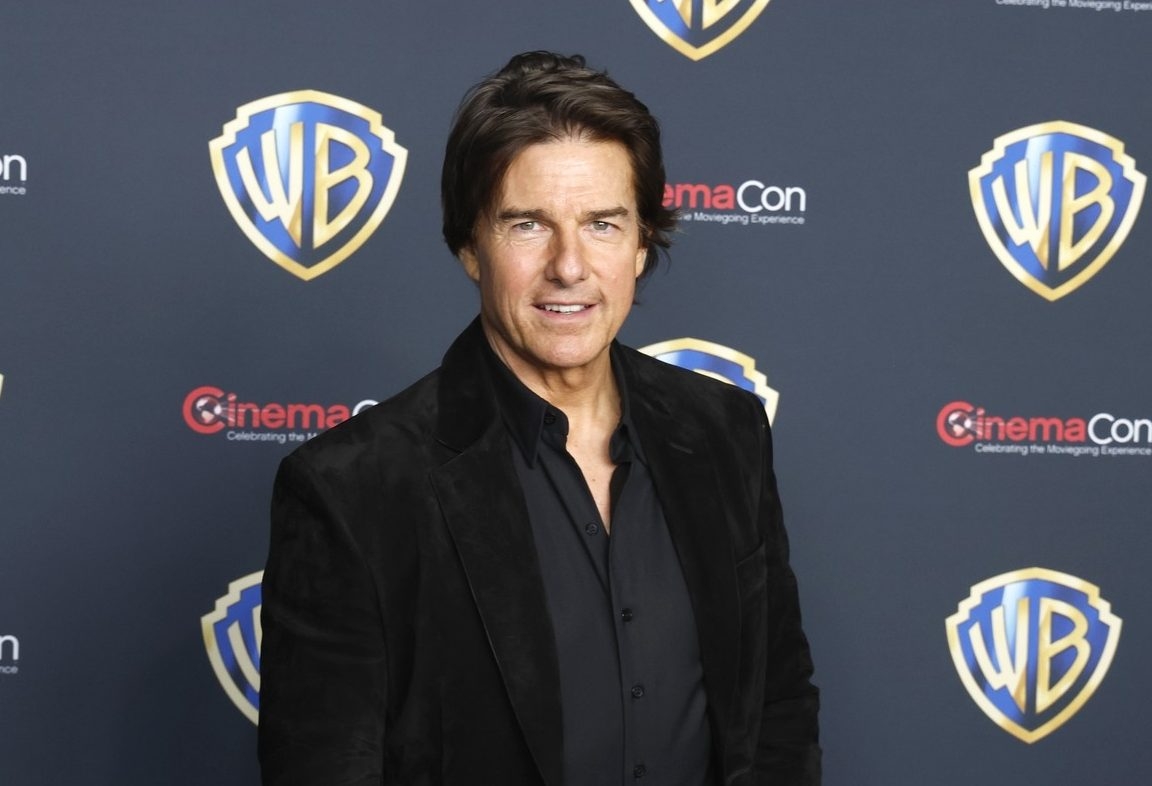 Entertainment
Tom Cruise unrecognizable with a gut and grey hair in ‘Digger’ trailer
Entertainment
Tom Cruise unrecognizable with a gut and grey hair in ‘Digger’ trailer
 Entertainment
Kultrun World Music Festival visits Waterloo Park
Entertainment
Kultrun World Music Festival visits Waterloo Park
 Entertainment
Langley’s tbird hosts country music concert
Entertainment
Langley’s tbird hosts country music concert
 Entertainment
Information sessions for national artistic funding set to be held at EA Rawlinson
Entertainment
Information sessions for national artistic funding set to be held at EA Rawlinson
 Entertainment
17 Xbox Game Pass title updates you might've missed this week
Entertainment
17 Xbox Game Pass title updates you might've missed this week
 Entertainment
Chilliwack artist shares how sketches evolve into ‘explosion of colour’ in solo show
Entertainment
Chilliwack artist shares how sketches evolve into ‘explosion of colour’ in solo show
More Local Coverage
Latest news Politics
Powerful pro-life ad featuring boxing legend to air during final World Cup matches
Politics
Powerful pro-life ad featuring boxing legend to air during final World Cup matches
 Business
AI Market Trends: Q2 2026 Review and Forecast
Business
AI Market Trends: Q2 2026 Review and Forecast