

The project in Scotland was heralded by officials. Now it looks more like a cautionary tale in the quest for ‘sovereign AI.’
(Bloomberg) — Last September, British real estate investor Martin Bellamy unveiled a timely proposal. He would develop a £15 billion ($20 billion) data center in Scotland that would be one of Europe’s largest computing facilities devoted to artificial intelligence. It would also belong to Britain, he said, providing the “sovereign AI” that governments everywhere covet.
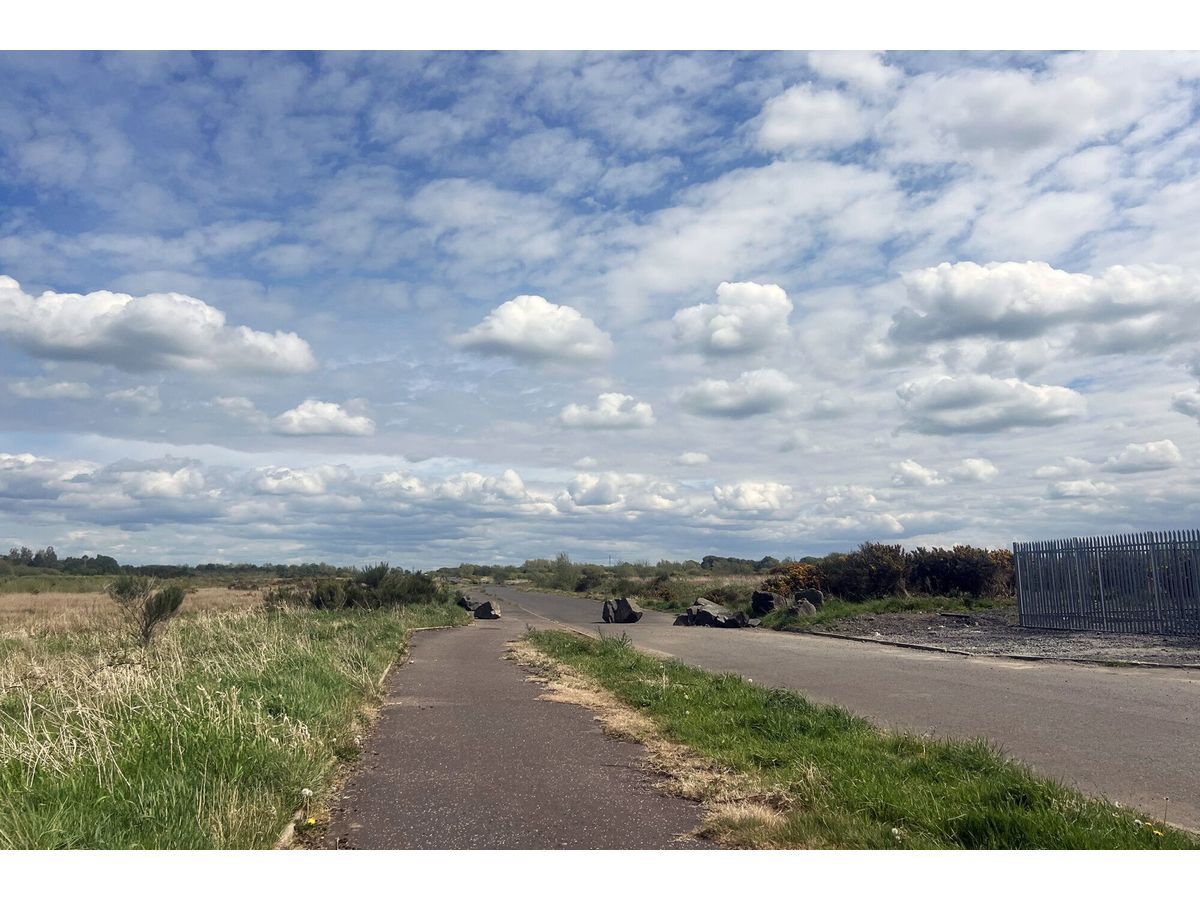
The site of the proposed project, though, remains a patch of land overgrown with weeds on Scotland’s industrial west coast, the latest sign of how even one of the world’s richest economies is struggling to meet the technological independence that politicians are demanding. The pitch by Bellamy’s company, AI Pathfinder, was part of a flurry of proposals in 2025 to bring more computing resources to the UK. His startup described the capability of creating, controlling and delivering technology locally as “not just strategic, but essential” for the nation.
The UK government praised the project and Scottish officials welcomed the “hundreds of skilled jobs” it would bring, joining a growing chorus of politicians that have painted data centers as engines for economic growth. Officials across the continent increasingly talk about AI as a national security issue, warning about the risks of relying on Silicon Valley and Asia for the tech. Yet, in recent months, Britain has lost a marquee data center campus from OpenAI and watched multiple homegrown computing startups shift resources abroad.
The potential impact on energy resources, meanwhile, has prompted the Scottish government in Edinburgh to consider freezing all new applications. Bellamy’s plan now looks more like a cautionary tale in the clamor for “sovereign AI.” His company has crumbled, mired in acrimonious lawsuits, and lost large portions of its staff.
It’s an unusual corporate saga, but indicative of the hype of so many promised AI mega-projects. “There’s a lot of smoke and mirrors,” said Mark Boost, chief executive officer of Civo, a British cloud and AI services provider whose clients include Oxford University. Constructing large data centers is “difficult in the whole of Europe,” he said.
AI Pathfinder’s pledge to build up to 1.5 gigawatts of AI capacity — using enough energy to power the city of Glasgow 30 miles away — reflected the goldrush around data centers. The firm’s sister company, Pathfinder 1, still plans to make the plan a reality, Bellamy said in response to questions from Bloomberg. “Pathfinder 1 has a clear intention to bring the Irvine site forward,” he said in a statement.
“As an Enterprise Zone, the site is well-suited to its intended use as an AI data center, and Pathfinder 1 expects the planning process to commence shortly.” As of recently, the 196-acre plot has a metal fence and a “for sale” sign. Locals see no indication of plans for development, or indeed the promised investment and jobs.
“I haven’t heard anything,” said Kat Jones, a Scottish activist who tracks local data center plans for their environmental impact. “It’s just nowhere near my radar.” AI Pathfinder hasn’t paid the initial £385 million investment it promised for the project, according to Mark Sugden, a spokesperson for North Ayrshire Council, the municipality that owns the proposed site.
Sugden declined to comment on the status of the project and didn’t make Tony Gurney, the council’s leader, available for an interview. Relentless demand for computing resources has created a booming cottage industry, turning crypto miners and entrepreneurs with limited technology experience into AI billionaires. Politicians across the globe are rushing to promote these plans as engines of economic growth, handing out perks and development incentives.
But many projects have tripped up on the finer points of financing or planning. Blackstone Inc.’s QTS recently pulled away from a 2,100-acre data center campus in Virginia. A major AI infrastructure initiative from the European Union is held up in delays.
Research firm DC Byte tracked around 8,400 global data center projects as of the second quarter. About 40% of those weren’t yet running and more than a sixth had no construction underway or committed. Britain has struggled particularly because of its electricity prices, some of the highest in Europe.
OpenAI announced earlier this year it was halting Stargate UK, a data center campus slated for a special economic zone, citing regulation and energy costs. With that context, Scotland has tried pitching its ample wind energy and uninhabited land as a natural host for data centers. In March, the Scottish government published a five-year plan to “harness the potential of AI,” and invited companies to build on publicly funded sites.
That included companies from figures like Bellamy, an investor known more for yacht marinas than AI potential. Still, his career has shown a keen eye for spotting government spending. Yachts and Vaccines For more than two decades, Bellamy has run Salamanca Group, an investment firm that went on to finance housing developments, malls and ports.
The firm spent four years upgrading the Barcelona marina OneOcean, turning it into what the firm calls “one of the largest superyacht destinations in the Mediterranean.” During the Covid pandemic, Bellamy incorporated a firm called National Vaccine Production Facility Ltd. It was dissolved in January 2022.
Since 2017, Salamanca Group has managed a brownfield site in Somerset, southern England, in a government enterprise zone. The site, called the Gravity Smart Campus, hosts a massive Jaguar battery plant for Tata Group. In April, the UK doled out £380 million in funds for the planned factory.
(Bellamy said in a statement that Salamanca Group and Gravity Smart Campus are not related to AI Pathfinder.) Bellamy is also listed as a director of Wildfox Resorts, which is setting up a holiday destination in Wales and is part of a government investment program. Initially pitched as a £300 million project opening in 2027, the resort has faced “significant delays” due to market conditions and now has a £200 million budget, according to Tom Edington, the resort’s chief executive officer.
When the government turned to data centers, Bellamy joined in. In 2024, Salamanca Group said it helped “play a pivotal role” in securing a £10 billion data center planned in northern England. Bellamy formed AI Pathfinder in May 2025, recruiting a small team that included Google and Dell Technologies veterans.
Four months later, the company introduced itself with bold plans: a £3.4 billion facility in Northamptonshire, north of London, and the far larger Scotland site. At first, the company looked to be moving fast. It began a £100 million seed financing in November that would have given it a valuation of £500 million.
Bellamy added four directors, including Dominic Johnson, a hedge fund manager who had been vice chairman of the Conservative Party and sits in the House of Lords. The UK government promoted Bellamy again, saying that his startup was “fast-tracking UK sovereign AI” with plans to invest £18 billion over the next five years. Lawsuit Then things started to get messy.
Bellamy ran a holding company behind AI Pathfinder with Patrick Hughes, a frequent business partner. According to legal filings in London, the pair disagreed about who would cover an initial £25 million in funding, and Hughes claimed to be blindsided by Bellamy’s board appointments and fundraising efforts. By the new year, the promised data center in England hadn’t broken ground.
In January, several executives at AI Pathfinder, including those from Google and Dell, incorporated a new entity called Sovereign AI with a similar business plan. Several members of Bellamy’s staff followed. In a lawsuit, lawyers for Hughes accused Bellamy of secretly orchestrating the sale of his startup’s assets to Sovereign AI.
Bellamy’s lawyers, in turn, accused Hughes of forcing AI Pathfinder to spike its financing plans, reducing its worth “to effectively nil.” Lawyers representing Bellamy and Hughes both declined to comment, as did Bellamy himself. Parham Kouchikali, litigation partner at Winston Taylor, representing Johnson and three others in the lawsuit from Hughes, said the clients are “confident in their case.”
He declined to comment further. A spokesperson for Sovereign AI said the company has “no affiliation with AI Pathfinder.” People familiar with Sovereign AI’s operations said it is working on the proposed site in Northamptonshire, but not the one in Scotland.
The company spokesperson declined to comment on its plans. Proposals keep coming into Scotland as officials try to get a grip on what’s being planned and where. A spokesperson for the Scottish National Party, which runs the country’s semi-autonomous government, said more attention is being given to the environmental impact as the industry evolves so rapidly.
“The Scottish Government is currently reviewing what action can be taken to help balance the rapid expansion of such centers with our national energy and climate goals — including a potential pause on applications,” the SNP spokesperson said in a statement. Both the SNP and government declined to comment on specific projects. Clean energy provider ILI Group submitted plans in early June for a 600-megawatt site north of Edinburgh, part of a £15 billion computing project.
CEO Mark Wilson said the company is in discussion with “several” potential customers and hopes to start construction next year. Another energy firm, Eneus Energy, has proposed building a data center 20 miles north of the town of Irvine, where Bellamy plans his project. Jones, the activist who runs the nonprofit Action to Protect Rural Scotland, has called for a moratorium on new data centers until environmental policies are in place.
“There’s so many people piling in,” she said. “There seems to be so little scrutiny.” —With assistance from Upmanyu Trivedi, Jack Sidders and Paula Doenecke.
- Published
- Jul 14, 2026
- Updated
- Jul 14, 2026
- Source
- Financial Post
- Category
- Technology
- Read time
- 7 min
Key facts
Why this matters locally
This technology story matters locally because it may affect readers, businesses, commuters, families, or public services in British Columbia.
Local impact
BC Post links this item to British Columbia coverage so readers can follow related city updates, weather, traffic, events, and category news in one place.
Timeline
Source and credit
BC Post may summarize, organize, and add local context for reader clarity. Original reporting remains with the listed publisher.
Related Articles
View all Technology
Transformer-manufacturing company to shut down its Chilliwack facility
Technology
Transformer-manufacturing company to shut down its Chilliwack facility
 Technology
Apple’s Lawsuit Could Choke OpenAI’s iPhone Rival Before It Even Ships
Technology
Apple’s Lawsuit Could Choke OpenAI’s iPhone Rival Before It Even Ships
 Technology
ECT Reprograms Adult Neurons into a Youthful State
Technology
ECT Reprograms Adult Neurons into a Youthful State
 Technology
Asus ROG Strix XG32UQWMS review
Technology
Asus ROG Strix XG32UQWMS review
 Technology
Spectro Cloud Raises $100 Million Series D to Help Customers Move AI Infrastructure Into Production Across Enterprise, Public Sector, Neocloud and Sovereign Cloud Environments
Technology
Spectro Cloud Raises $100 Million Series D to Help Customers Move AI Infrastructure Into Production Across Enterprise, Public Sector, Neocloud and Sovereign Cloud Environments
 Technology
Quebec announces plan to train more aerospace workers as demand surges
Technology
Quebec announces plan to train more aerospace workers as demand surges
More Local Coverage
Latest news Business
AI Market Trends: Q2 2026 Review and Forecast
Business
AI Market Trends: Q2 2026 Review and Forecast
 Politics
Powerful pro-life ad featuring boxing legend to air during final World Cup matches
Politics
Powerful pro-life ad featuring boxing legend to air during final World Cup matches
 Local News
Cowichan sports shorts: rugby, hockey, biking
Local News
Cowichan sports shorts: rugby, hockey, biking