


Vancouver Mayor Ken Sim threatened to take action against the province this week over its rollout of involuntary care, but refused to say what that action will be—and could not answer why he is arguing new beds must be located within the city.
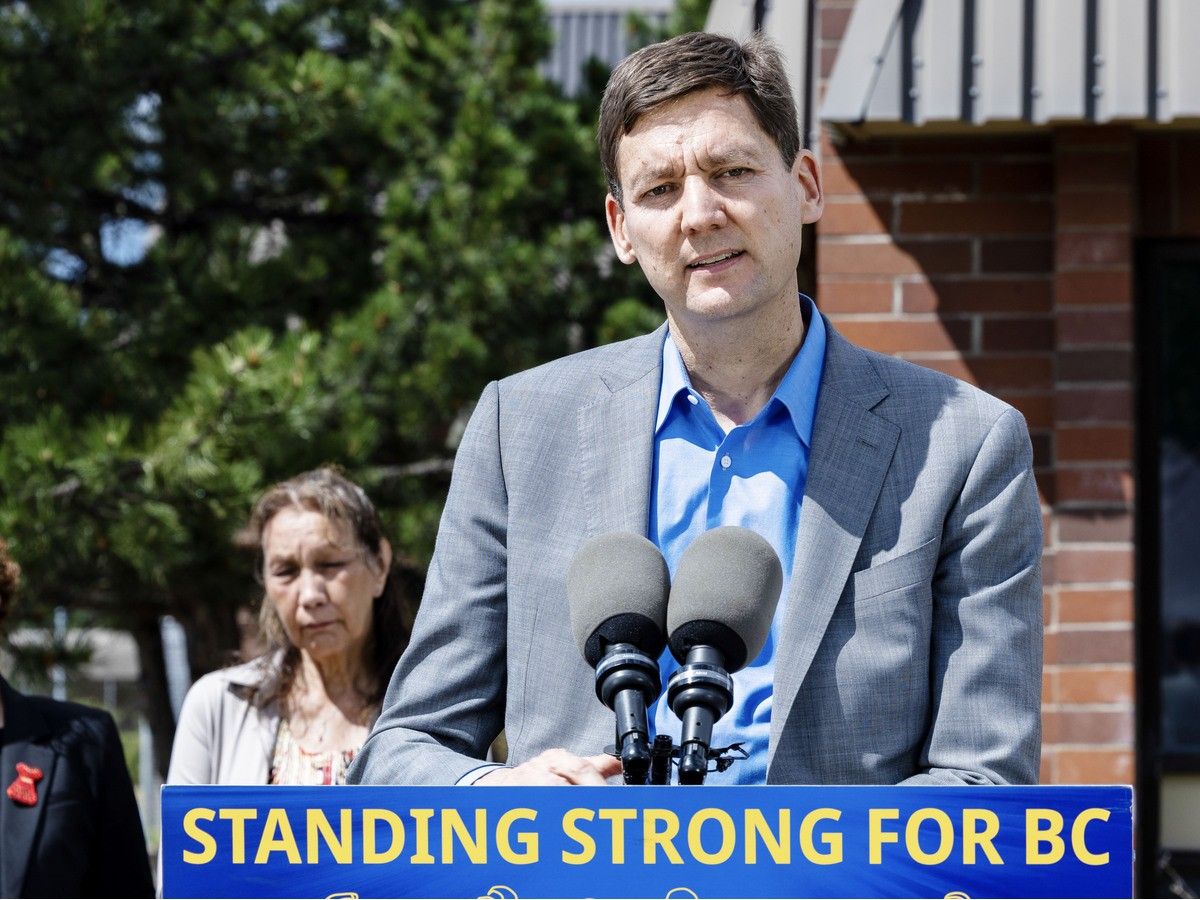
Vancouver Mayor Ken Sim threatened to take action against the province this week over its rollout of involuntary care, but refused to say what that action will be—and could not answer why he is arguing new beds must be located within the city. The B.C. government’s plan to open “highly secure facilities” for people suffering a combination of drug addiction, mental health issues and brain injuries was announced by Premier David Eby—standing alongside Sim—in September of 2024. The move was described as necessary for those who are incapable of seeking out voluntary treatment, and necessary to manage the public safety risk these patients can pose.
In a public letter Monday, Sim complained none of the new beds or facilities established since the announcement are located in Vancouver: “Once again, the province has chosen to ignore the city carrying the greatest burden of British Columbia’s addiction, mental health, and public safety crises.” “If the province continues to exclude Vancouver from involuntary care, the city of Vancouver will be forced to act in unprecedented ways,” Sim’s letter said. “If the province continues to exclude Vancouver from involuntary care, the city will have to consider every available option to ensure the health and safety of all Vancouverites.”
No details, timeline for action When asked about this bold pledge at an unrelated news conference, Sim did not provide any information about what this action could look like or when it might begin. “We are in new territory here. But I can tell you one thing: There are a lot of people that are suffering.
There are people that are dying. There are people with significant mental health challenges or substance use disorder that pose a significant harm to themselves and the safety of others as well. And it’s completely unacceptable that the province has yet to provide one single bed in Vancouver,” Sim said.
Asked again, the mayor said he was confident he had the province’s attention and issued a vague ultimatum. “If we don’t get action from the province, more to come. But we’ll give them this one last opportunity to listen to what we have to say and act accordingly,” Sim said.
The plan thus far has focused on using and renovating existing facilities to ramp up capacity. The first beds announced were at the Surrey pre-trial centre, a provincial jail where men from across the Lower Mainland who have been charged with crimes are incarcerated. The beds are operated by the Provincial Health Services Authority and are not solely for people from Surrey.
The second is on the grounds of a provincial women’s jail in Maple Ridge. Those beds are not earmarked for people who have been criminally charged and are not exclusively designated for people who reside in the suburb in which they are located. The site is operated by Vancouver Coastal Health.
Sim’s letter came on the heels of a provincial announcement last week of an additional 60 beds in Surrey on the site of a shuttered recovery house and 10 beds in Prince George at what used to be a youth detention centre. CTV News asked Sim why he is arguing that beds need to be located in Vancouver, given that accessing a bed does not appear to be related to where a person resides, or where someone is apprehended under the Mental Health Act. “We are ground zero.
It just doesn’t make sense. What happens to the people that need the help in Vancouver? They’re not getting shipped up to Prince George,” he said, adding “the provincial government isn’t doing their job.”
Is Vancouver ground zero? Sim cited the Downtown Eastside as visible evidence the city is disproportionately struggling with the public safety issues posed by residents who need the type of involuntary care the province has committed to expand. However, the province’s plan was never touted as a response to the issues of entrenched poverty, visible homelessness, public drug use, or street-level crime.
Vancouver-specific incidents cited when making the public safety case for this type of “highly secure” involuntary care included a triple-stabbing in Chinatown last year where the suspect, who had a violent history in northern B.C., was on a day pass from a forensic psychiatric facility in a neighbouring city. Another case involved a gruesome homicide and maiming in downtown Vancouver by a suspect that the then-police chief described as a “very troubled” person. That man was living in Surrey at the time he was alleged to have committed the crimes.
The Vancouver Police Department, which has the highest per capita budget of any police agency in a major city in Canada, justifies the spending by saying the public safety issues in the municipality are unique and outsized because it is the region’s hub. The claim essentially boils down to the argument that people who live in neighbouring cities—not only Vancouver residents—are at least partially responsible for crime and public disorder. While Vancouver may have a higher volume of crime than other cities due to its population, both crime rates and the crime severity indexes are higher than Vancouver’s in a number of other cities in the province.
Statistics Canada data from 2024 on these measures shows Chilliwack, Kamloops, Kelowna, and Nanaimo are all statistically less safe than Vancouver. Provincial context A spokesperson for the Ministry of Health told CTV News work is ongoing to expand involuntary care. The ministry did not comment on Sim’s threats to take action or say if or when Vancouver will see additional beds.
“We recognize Mayor Sim’s concerns for his community and know that there is always more work to be done. We are committed to expanding the capacity for involuntary mental health and addictions care to every region of the province, including in Vancouver,” an emailed statement said. There are different security and support levels, as well as anticipate durations for facilities used for people involuntarily committed under the Mental Health Act.
Psychiatric wards in hospitals and dedicated in-patient facilities, for example, are among the 70 locations across BC providing that care, including in the city of Vancouver. The ministry also provided details about the system’s existing capacity of beds that can be allocated to people involuntarily detained under the Mental Health Act. B.C.’s five health authorities have a combined 1,666 beds and 473 of those are in the densely populated Vancouver Coastal Health region, which works out to 28 per cent.
The health authority serves approximately 1.25 million people. Fraser Health, which encompasses a much larger geographic area and serves a population nearly double that of Vancouver Coastal, has 566 beds, which works out to 33 per cent. Northern Health, which serves roughly 300,000 people spread across around 600,000 kilometres has 91 beds, or about five per cent of the province’s capacity.
In addition, there are 383 beds run by the Provincial Health Services Authority. Those beds, which include 105 at the Red Fish Healing Centre for Mental Health and Addiction in Coquitlam, are available to all residents of B.C.
- Published
- Jul 15, 2026
- Updated
- Jul 15, 2026
- Source
- Ctv News
- Category
- Politics
- City
- Vancouver
- Read time
- 5 min
Key facts
Why this matters locally
This politics story matters locally because it may affect readers, businesses, commuters, families, or public services in Vancouver.
Local impact
BC Post links this item to Vancouver coverage so readers can follow related city updates, weather, traffic, events, and category news in one place.
Timeline
Source and credit
BC Post may summarize, organize, and add local context for reader clarity. Original reporting remains with the listed publisher.
Related Articles
View all Politics
Powerful pro-life ad featuring boxing legend to air during final World Cup matches
Politics
Powerful pro-life ad featuring boxing legend to air during final World Cup matches
 Local News
Lions earn first win by handing Elks their first loss in 36-24 decision
Local News
Lions earn first win by handing Elks their first loss in 36-24 decision
 Politics
Vaughn Palmer: David Eby's slow and expensive step toward involuntary care
Politics
Vaughn Palmer: David Eby's slow and expensive step toward involuntary care
 Business
B.C.'s Massey Tunnel replacement doubles in cost to estimated $8.5 billion
Business
B.C.'s Massey Tunnel replacement doubles in cost to estimated $8.5 billion
 Local News
Consumer watchdog secures 4 ticketing undertakings during World Cup
Local News
Consumer watchdog secures 4 ticketing undertakings during World Cup
 Sports
Thoughts turn to legacy as full-time whistle nears for Vancouver's World Cup
Sports
Thoughts turn to legacy as full-time whistle nears for Vancouver's World Cup
More From Vancouver
View all Top
Vancouver daycare avoids eviction from church hall — but only until year's end
Top
Vancouver daycare avoids eviction from church hall — but only until year's end
 Business
'We know we're a little crazy': Sisters turn spontaneous idea into downtown Vancouver cafe
Business
'We know we're a little crazy': Sisters turn spontaneous idea into downtown Vancouver cafe
 Top
Lightning hits homes on Vancouver Island as storm swept across region
Top
Lightning hits homes on Vancouver Island as storm swept across region
More Local Coverage
Latest news Business
AI Market Trends: Q2 2026 Review and Forecast
Business
AI Market Trends: Q2 2026 Review and Forecast
 Local News
Cowichan sports shorts: rugby, hockey, biking
Local News
Cowichan sports shorts: rugby, hockey, biking