

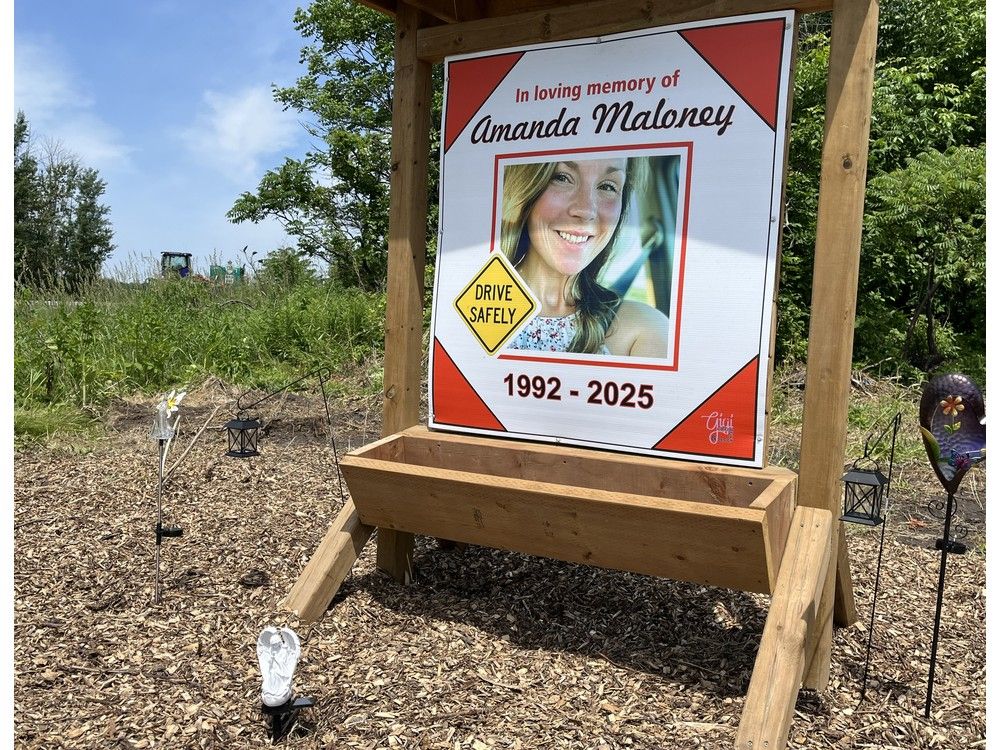
Explaining why Ontario police lay Highway Traffic Act charges instead of Criminal Code of Canada ones after a fatal collision.
Article content Two separate fatal collisions in Stormont, Dundas and Glengarry occurred just months apart, and once charges were laid, they were for careless driving causing death under the Highway Traffic Act. Why did the SDG OPP opt to charge the drivers deemed at fault under the provincial Highway Traffic Act (HTA) instead of laying more severe charges under the Criminal Code? Recommended Videos It is a distinction that can be significant for families and those involved with legal proceedings.
While both paths stem from a roadside tragedy, the legal consequences for drivers charged depends on how police and the prosecuting Crown attorneys decide to proceed. What are the recent cases? Nantharagu Sangaramoorthy pleaded guilty to the HTA charge of careless driving causing death this past May in relation to a fatal collision in March 2025 that resulted in the death of Amanda Maloney.
Sangaramoorthy was sentenced to a three-year driving suspension and a $5,000 fine, with some consideration given to his status as a commercial driver. In the statement of facts entered into the court record, Sangaramoorthy was driving at 90 km/h behind Maloney’s vehicle when dashcam video footage showed him reaching into a bag on the passenger seat. Maloney was waiting to turn onto County Road 22 and Sangaramoorthy failed to react in time, striking Maloney’s vehicle and launching it into the path of an oncoming tractor-trailer.
Maloney was pronounced deceased at the scene. A trial is currently underway in the August 2024 death of Charlotte Light. Light was only 14 years old at the time of her death, and Karen Brennan was charged in February 2025 under the HTA with careless driving causing death.
Testimony at the trial so far has centred on how and where on the roadway Brennan was driving when she struck Light, who was cycling eastbound on the paved westbound shoulder of County Road 2 between Ingleside and Long Sault. Light was pronounced deceased at the scene. The Standard-Freeholder did not inquire with the OPP or the prosecutors in either case as it’s unlikely they would have responded and discussed how they decided to proceed.
What’s the difference between the charges? The HTA offence, as mentioned above, is careless driving causing death. Within the Criminal Code of Canada, a comparable offence is operation causing death.
David Anber is a defence attorney with nearly 20 years of experience dealing with traffic-related incidents in court who provided insight into the fundamental differences. According to Anber, the decision to proceed under the HTA or the Criminal Code boils down to penalties, licence suspensions, and the burden of proof. Under the HTA, fines can range from a minimum of $2,500 to $62,000, a maximum of two years of incarcerations, or both.
Under the Criminal Code, fines can actually be as low as $1,300, but can carry a prison sentence of up to life in prison. In terms of licence suspensions, the maximum length of time a person found guilty under the HTA can lose their licence is two years. A court may also decide not to suspend the driver’s licence.
Under the Criminal Code, a court can impose a suspension of any length of time it deems appropriate. According to Anber, Ontario has a culture of overcharging and prioritizing consequences, which often drives police and prosecutors to pursue harsher legal avenues when outcomes are severe, a trend driven by public-safety aims. Anber said that in more recent years he’s seen law enforcement ‘get it right.’
“Everything comes down to the nitty gritty fact differences. I have seen cases where an accused drifts across the centre line into oncoming traffic and it be treated as dangerous driving; cases where it has been treated as careless driving; and, cases where it has resulted in acquittals on any charges,” said Anber. How does the available evidence affect the charge laid?
Prosecutors often struggle to separate an incident’s tragic outcome from what evidence is available about the conduct of the driver. While this argument has frequently led to convictions, it remains a constant point of contention. “If the evidence showed the client drove exactly as alleged but only hit a trash can, would we even be in court?” said Anber.
It’s a question he said he’s put to courts on his clients’ behalf that has led to acquittals. A link exists between context and consequences, said Anber. Drivers must exercise greater prudence where pedestrians are expected, and failing to do so can amount to a lack of due care or a marked departure from the standard of care.
Evaluating the accused’s actual driving remains far more critical to deciding the case than the ultimate fallout. Anber said that while a jail sentence is often part of a conviction under the HTA, the reality is that police and prosecutors are already off to a weaker footing in terms of their ‘evidentiary foundation,’ which often leads the court to proceed with fines and a licence suspension. A charge under the HTA does not result in a criminal record.
However, as Anber pointed out, charges under the HTA can be upgraded to Criminal Code charges during the course of proceedings. Police officers lay charges based on the evidence available through their investigation. They can consult the Crown attorney’s office on which might be the appropriate offence, and whether the Crown feels the evidence could reasonably lead to a conviction.
The final decision rests on which charge to lay rests with police. Once the charge is sworn to in court, the Crown attorney(s) assigned — or assistants to the Crown in provincial offences court — are responsible for securing a conviction. They also have discretion to withdraw or change the charge based on the evidence, testimony, and their assessment of a reasonable probability of conviction.
Why the two offences? Careless driving causing death under the HTA is a relatively new legal tool for police and prosecutors. Ontario only added the charge to the HTA in 2018 as an uptick in distracted driving led to pressure from victims’ advocates.
Statistics from 2022, released in February of this year, show that 19 per cent of all road fatalities in Ontario were due to distracted driving.
- Published
- Jul 17, 2026
- Updated
- Jul 17, 2026
- Source
- Standard-freeholder
- Category
- Crime
- Read time
- 5 min
Key facts
Why this matters locally
This crime story matters locally because it may affect readers, businesses, commuters, families, or public services in British Columbia.
Local impact
BC Post links this item to British Columbia coverage so readers can follow related city updates, weather, traffic, events, and category news in one place.
Timeline
Source and credit
BC Post may summarize, organize, and add local context for reader clarity. Original reporting remains with the listed publisher.
Related Articles
View all Crime
Video shows rescue of lone survivor from deadly B.C. helicopter crash
Crime
Video shows rescue of lone survivor from deadly B.C. helicopter crash
 Crime
A dozen cats are missing after New Westminster apartment fire that displaced roughly 100 residents
Crime
A dozen cats are missing after New Westminster apartment fire that displaced roughly 100 residents
 Crime
‘N’ driver involved in Abbotsford rollover crash, police say
Crime
‘N’ driver involved in Abbotsford rollover crash, police say
 Crime
Pedestrian struck by bus, critically injured in Surrey
Crime
Pedestrian struck by bus, critically injured in Surrey
 Crime
B.C. seeks forfeiture of alleged gangster’s properties worth more than $6.2 million
Crime
B.C. seeks forfeiture of alleged gangster’s properties worth more than $6.2 million
 Crime
Train strikes crashed car at Deroche rail crossing
Crime
Train strikes crashed car at Deroche rail crossing
More Local Coverage
Latest news Politics
Powerful pro-life ad featuring boxing legend to air during final World Cup matches
Politics
Powerful pro-life ad featuring boxing legend to air during final World Cup matches
 Business
AI Market Trends: Q2 2026 Review and Forecast
Business
AI Market Trends: Q2 2026 Review and Forecast