

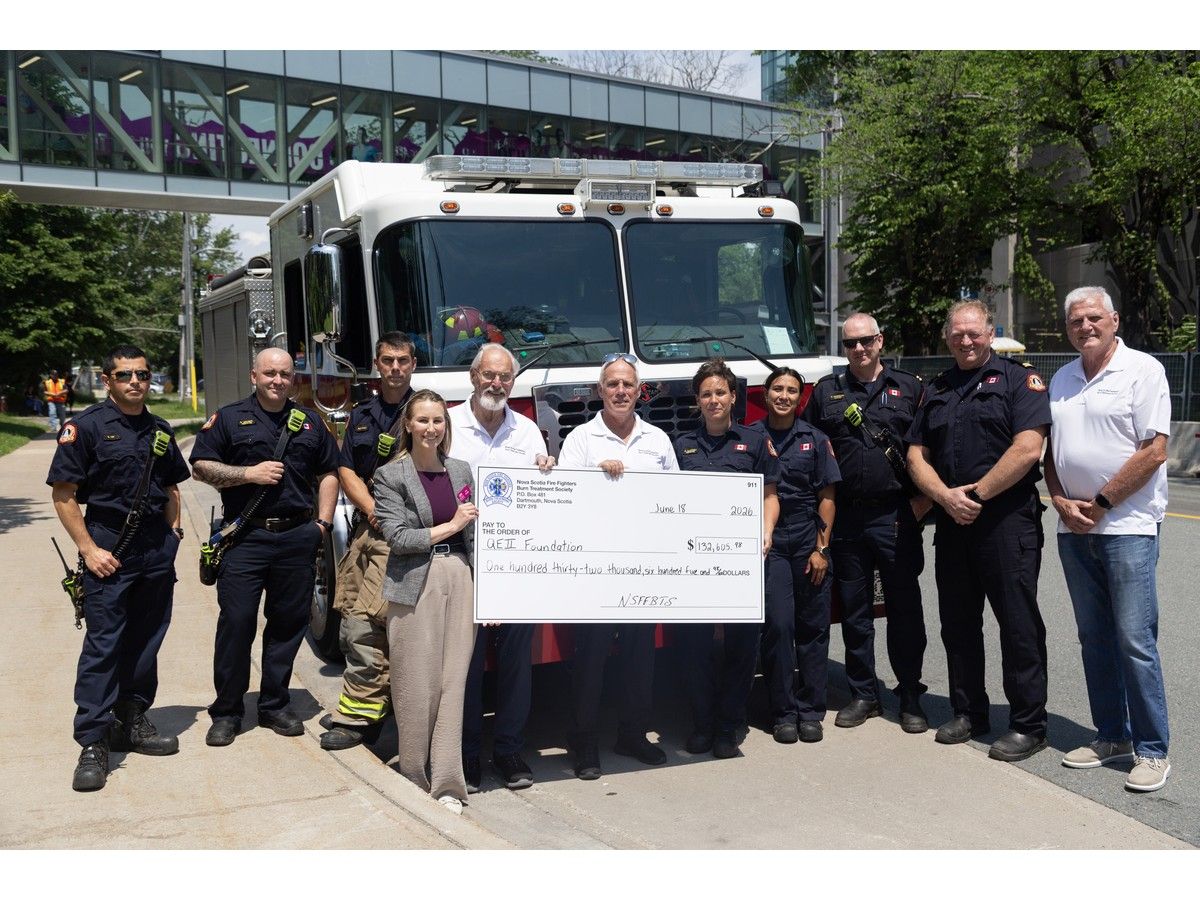
The new equipment allows for patients to be moved to the new intermediate care unit instead of staying in the ICU, while still being monitored.
When it comes to a burn injury, victims often deal with months of inpatient treatment and surgeries and deal with scars that stick with them forever. In an effort to make the process a little easier, the Nova Scotia Fire Fighters’ Burn Treatment Society donated $132,000 to the QEII Foundation that allowed them to get special monitors and expand the QEII Health Sciences Centre’s burn unit to include a four-bed intermediate care unit. According to a foundation news release, the unit “marks a major advancement for burn care in Nova Scotia” and will allow patients who no longer require intensive care unit-level care to move to a lower level of monitoring within the burn unit.
‘One step closer to getting home’ Elinor Kelly, a clinical nurse lead at the QEII, said the new unit bridges a gap for patients going through care for severe burns. An intermediate care unit, or IMCU, is meant for patients who no longer require ICU-level care such as a ventilator but who still need close monitoring and specialized care for their injuries. The new cardiac monitors allow staff to continuously see patients’ heart rate, blood pressure, oxygen level and temperature while they recover within the burn unit.
Previously, Kelly said, some patients would end up having to stay in the ICU longer only because they needed to be monitored during lengthy dressing changes or were recovering after surgery. “When we’re doing these big dressings, we have to give sedation and analgesia,” Kelly said. “Before, if we had huge dressing changes, that might make the patient have to stay in the ICU because we couldn’t monitor the patient appropriately downstairs.”
Other perks to the IMCU being directly integrated into the burn unit is that it allows patients to be monitored properly, freeing up an ICU bed, while still being surrounded by the unit’s care team, including specialized nurses, physiotherapists, surgeons and occupational therapists. “You’re still getting all of this care, but we’re kind of moving you to that next step,” Kelly said. “It’s one step closer to getting home.
“ Fundraising since 1983 Related A Pictou County mother's quest to get care for her son's mental illness and drug use Halifax Infirmary expansion finally on time, on budget, committee told Dave Collier, a retired firefighter and chairman of the society said that the since the group was formed in 1983 it has raised about $3 million to put toward projects for burn units at the QEII and the IWK Health Centre. “We’ve often helped out some of the burn survivors themselves with special garments that are needed that are not covered under MSI. . . .
We’ve helped fund educational seminars for some of the staff, and then we send some of the burn survivors to different conferences where they can meet other people that have been through similar situations,” he said. “But we wanted to do a little more.” This led to them asking the burn unit what they needed.
After being warned the bill would be large, the society was told about the need for new monitors. “We said, ‘Yeah, that’s something we can get behind,’” Collier said. “So, we kind of concentrated our efforts in the last year or so with that as a focus.”
This led to a year of barbecues, bingos and golf tournaments, in addition to the society’s weekly 50/50 draw, to gather the donation. More than monitors The society also funded a specialized shower chair for the burn unit and in the past have bought pressure garments among other supports. With the chair, Collier said, patients can be more comfortable during showers and dressing changes, while the process is made easier for staff.
Many patients with severe burns are looking at stays in hospital that could go for weeks or months. Collier said something like being able to take a proper shower can make a real difference in their comfort and overall recovery. Medical equipment often comes at a high cost, however, Kelly said the value for patients is far beyond the price tag.
“You can’t put a dollar amount on it, and medical equipment is unbelievably expensive,” she said. “I think the public would be really happy to know this is money well spent.” Recovery after the hospital
The society has provided support to burn survivors over the years, going far beyond buying equipment. For Collier, some of the most important things provided are peer support programs like Camp Connect, an all-ages camp for burn survivors and their families. According to Kelly, recovering from a serous burn doesn’t end when the hospital stay does.
The reality is that patients may have to spend months regaining function in affected areas, rebuilding wounded skin and adapting to permanent physical changes. Camp Connect can help by introducing patients to people having similar experiences, educating families and helping burn victims adjust and accept changes that come with their injuries. “We try to move them from a victim to becoming a survivor and getting on with their life,” Collier said.
Those working in the burn unit and the firefighters see the donation as more than just a big cheque. “The way we look at it is it’s going to make the difference in the recovery aspects and the health of the survivors,” Collier said. “So it’s not necessarily the dollar figure per se.
It’s what it can do to help them.”
- Published
- Jul 16, 2026
- Updated
- Jul 16, 2026
- Source
- Pniatlantic
- Category
- Top
- Read time
- 4 min
Key facts
Why this matters locally
This top story matters locally because it may affect readers, businesses, commuters, families, or public services in British Columbia.
Local impact
BC Post links this item to British Columbia coverage so readers can follow related city updates, weather, traffic, events, and category news in one place.
Timeline
Source and credit
BC Post may summarize, organize, and add local context for reader clarity. Original reporting remains with the listed publisher.
Related Articles
View all Top
Rock the Lake celebrated its ninth year at Prospera Place this past weekend
Top
Rock the Lake celebrated its ninth year at Prospera Place this past weekend
 Top
Million-dollar contract awarded for Surrey Sport & Leisure Complex renos
Top
Million-dollar contract awarded for Surrey Sport & Leisure Complex renos
 Top
MLA Jordan Kealy to face jury in sexual assault case
Top
MLA Jordan Kealy to face jury in sexual assault case
 Top
BCWS aircraft helping Kamloops firefighters battle grass fire above Shuswap Road
Top
BCWS aircraft helping Kamloops firefighters battle grass fire above Shuswap Road
 Top
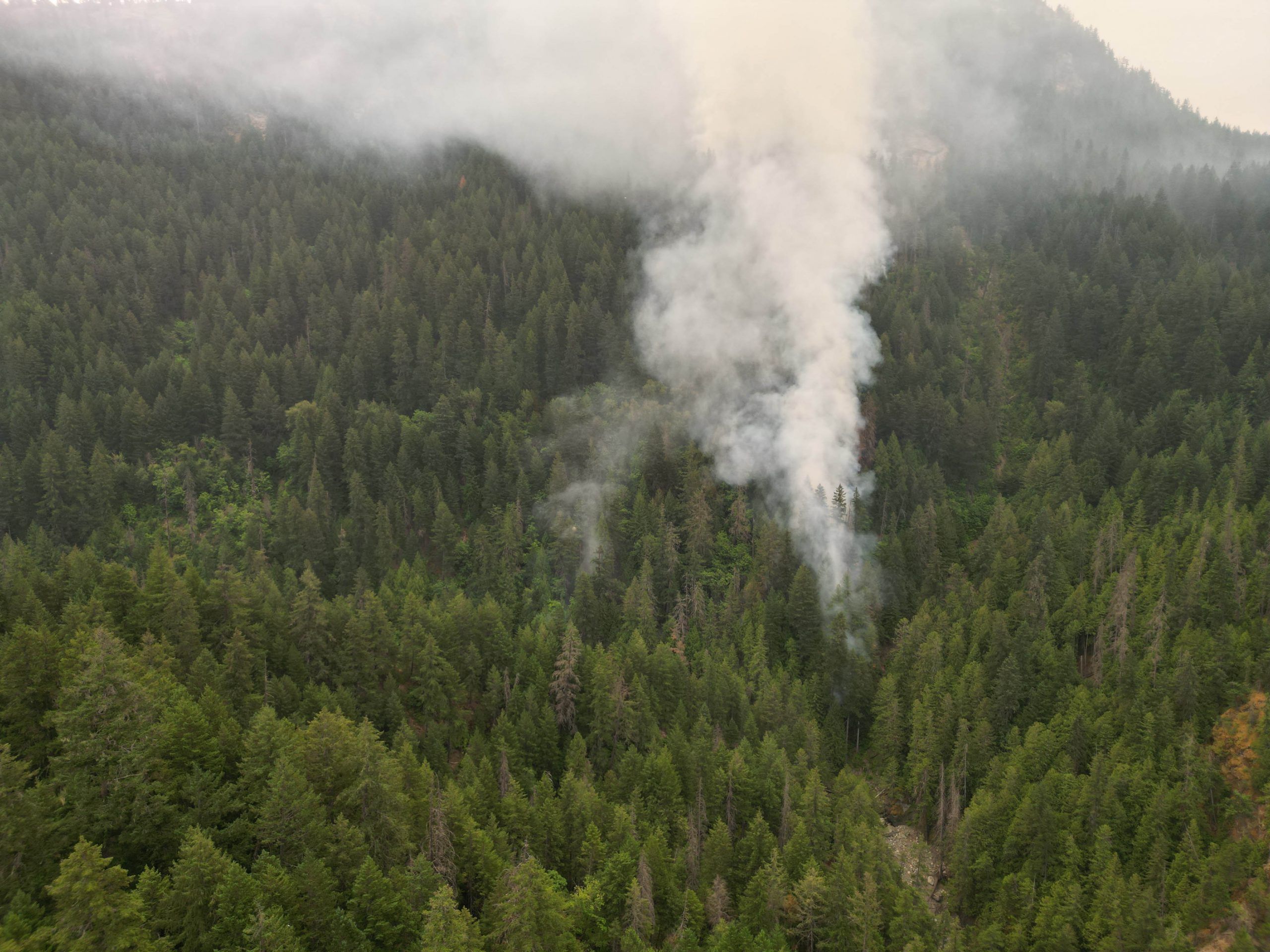
Brunswick Creek wildfire grows, leads to air quality warning in east Fraser Valley
Top
Brunswick Creek wildfire grows, leads to air quality warning in east Fraser Valley
 Top
'A sacred place': Delta park to get dedicated ash-scattering site
Top
'A sacred place': Delta park to get dedicated ash-scattering site
More Local Coverage
Latest news Business
AI Market Trends: Q2 2026 Review and Forecast
Business
AI Market Trends: Q2 2026 Review and Forecast
 Politics
Powerful pro-life ad featuring boxing legend to air during final World Cup matches
Politics
Powerful pro-life ad featuring boxing legend to air during final World Cup matches