

An excommunication story, fifty-six years in the making The post Vatican Casts Out Traditionalist Sect. What’s Next for Canadian Followers? first appeared on The Walrus .
Forget The Da Vinci Code. The Catholic Church has been brewing better plots for 2,000 years: catacomb-deep conspiracies, operatic conclaves, bitter doctrinal battles, forged gospels, disputed miracles, and rival popes. It’s enough intrigue to keep dozens of Dan Browns busy.
Some of those dramas fade. Some don’t. One saga has finally come to a head.
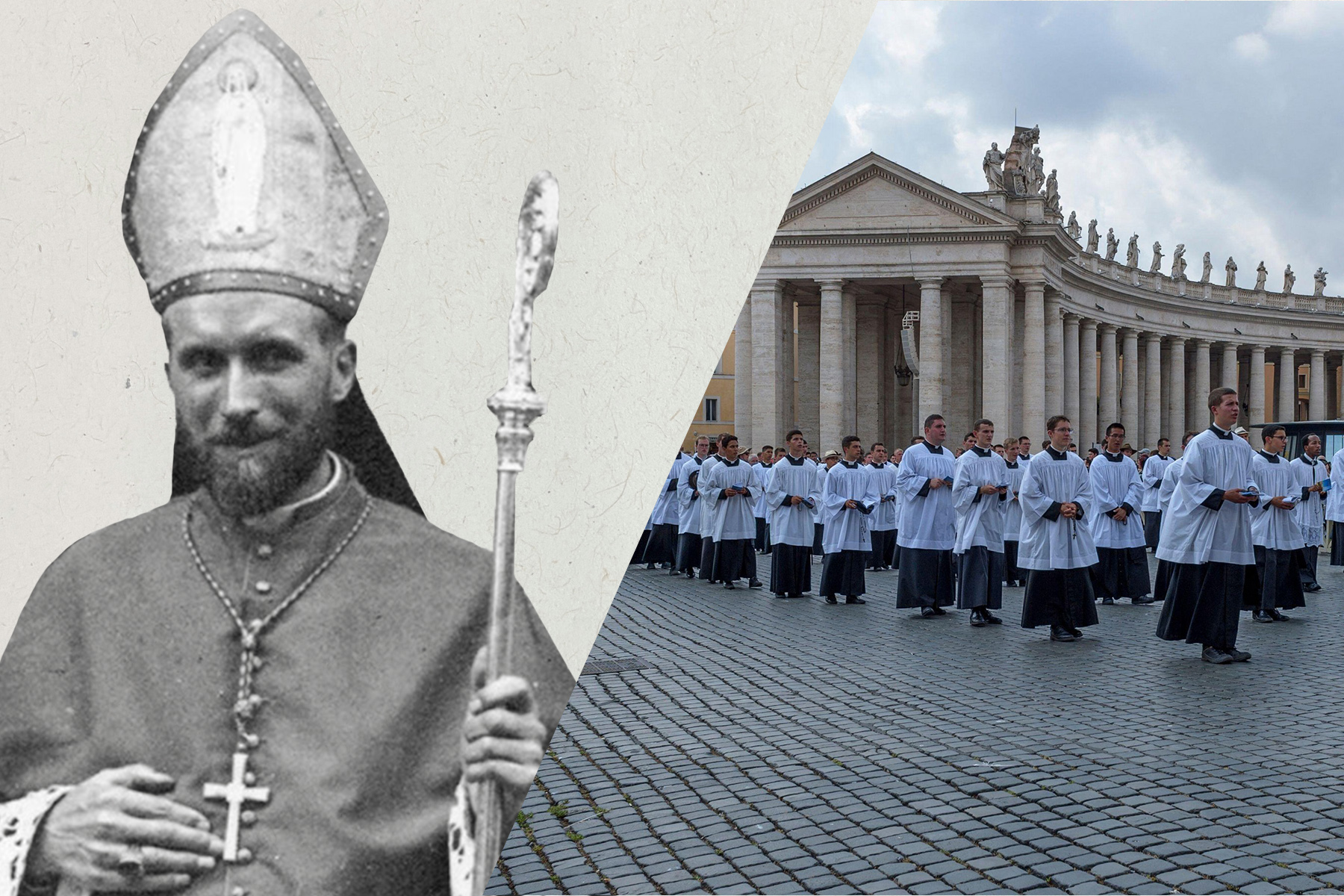
The Vatican has cast out the decades-old Society of Saint Pius X (SSPX), the defiant splinter sect founded by Archbishop Marcel Lefebvre. I spoke with Michael W. Higgins, one of the leading scholars on the papacy and contemporary Catholicism, about how this ecclesiastical family feud began, why it finally boiled over, and what it says about the Church today. Maybe you can start by explaining a bit about who the Society of St. Pius X are and why they’ve been such a headache for the Church.
The Fraternitas Sacerdotalis Sancti Pii X—or the Priestly Fraternity of St. Pius X—was created in 1970 by Marcel Lefebvre, a disgruntled French missionary prelate. Lefebvre repudiated the Second Vatican Council, which ran from 1962 to 1965. The council had modernized many aspects of the Roman Catholic Church.
New teachings included the use of the vernacular during mass, as opposed to Ecclesiastical Latin, and affirmed the holiness of other faiths. Lefebvre would have none of this. He became the pre-eminent voice of traditionalist dissidents and founded his own seminary in Econe, Switzerland, to train like-minded future clerics and drew disaffected lay Catholics by appealing to their unhappiness with the changes in the liturgy.
By rejecting the teachings of the council, even as they profess loyalty to the pope, they saw themselves as the “true” Catholics, devoted to maintaining the authentic voice of the tradition, the rightful heirs of an apostolic Church that—they believe—had lost its way. Several popes attempted to bring him and his following back into full communion. Paul VI, John Paul II, Benedict XVI, and Francis tried to maintain dialogue, offered some goodwill concessions, and refrained from censure.
Lefebvrevists, after all, were not heretics or apostates but leaned toward being schismatics—meaning they were rupturing the unity of the Church without abandoning its faith. Of the Church’s gravest offences, schism is perhaps the least severe. It didn’t work?
The archbishop was not for turning, and papal efforts to avoid a formal schism were unsuccessful. In 1988, following the consecration of four of his priests in open defiance of the pope, all the clerics involved in the episcopal ordinations were excommunicated. It seemed like the end for the Society of Pius X, but it proved otherwise.
More conversations ensued; some compromises were made by Rome; and then, in 2009, the excommunications were lifted. But the Lefebvrevists were not mollified by papal efforts at rapprochement, and their doctrinal intransigence remained. So what final line did they cross?
On July 1, they conducted a reprise of their 1988 bold rupture—ordaining four bishops without a papal mandate authorizing it. Leo XIV was compelled to act decisively. The bishops involved, including the lesser clerics, were excommunicated.
Pope Leo then went further than his predecessors in that he declared that the priests and lay members of the society will also be automatically excommunicated if they adhered to SSPX convictions. In other words, it is not just the officiants that are to be held to account. All are guilty.
The Pius X folk massively misread the character of Pope Leo. They forgot he is a canon lawyer and that his training disposed him to be more rigorous in defining the boundaries of acceptable dissent. What influence does the SSPX actually have?
Are they an annoying splinter group or a more serious challenge to the Church? The Lefebvrevists or Lefebvrites, as they are also called, are a thorn in the flesh of the institutional Church. They do not constitute a profound threat to Church unity, as their numbers—some 600,000 members worldwide, around 550 priests, a score of seminarians and oblate sisters in numerous districts, as they are defined—are scattered widely and diffusely.
But they remain an irritant with the potential to marshal other right-leaning Catholics to their cause. There are other instances of breakaway bodies that have been emboldened by the Lefebvrites. For instance, at the end of this month, on one of the Orkneys in Scotland, a monk will be consecrated a bishop by a Canadian who broke with the Society of St. Pius X because of its own perceived drift from the teachings of the founder and subsequent accommodations with the Roman hierarchy.
Pierre Roy, consecrated a bishop by a Brazilian Lefebvrite, is now a declared Sedevacantist—meaning he believes that there has been no legitimate pope since John XXIII or Paul VI. Everything went south following the death of Pope Pius XII in 1958, when subsequent popes embraced “modernism,” convoked the Second Vatican Council, and sought to implement its heretical teachings. These small groups feed on their own discontent, fracture over disputes around who is the truly orthodox authority, and inflict damage on credulous Catholics.
Given how many chances the Lefebvrites got, it sounds like it’s pretty hard to get excommunicated. The Church sees excommunication as a radical censure or sanction and prefers to find ways of integration as opposed to institutional alienation. The pope’s role is to maintain unity.
There is ample room in the Church for diversity, conflicting theological schools, and heatedly contested debates around issues of morality. But there are non-negotiables. As the Italian Jesuit Anthony Spadaro rightly observes: “ambiguity tolerated for decades curdles into architecture.”
Pope Leo’s recent moves are a rare escalation. In the past, the excommunications were reserved for the participating prelates. By expanding the reach to include all those who adhere to the convictions of the schismatic bishops, the pope has made it plain there are clear limits.
What are the spiritual and practical consequences for the SSPX now that they’ve been cut loose? Excommunications are not a punitive affair casually invoked. They carry with them exclusion from the sacraments as well as other penalties.
In every instance, however, reconciliation and mercy are the final goals. So even now Pope Leo would take them back? The Vatican, through its nuncios, or papal ambassadors, and through its national episcopal conferences, is prepared to welcome back those now in schism if they seek genuine reconciliation.
Does SSPX’s influence extend to Canada? And what happens to members here now? The Society of St. Pius X has a small Canadian footprint.
According to their website, they have five priories distributed among Quebec, Ontario, Manitoba, Alberta, and British Columbia. They also run a small number of schools, a retirement home, and a retreat house. They have twenty-three priests, four oblate sisters, four brothers, and a number of lay supporters.
They constitute a negligible fraction of the Canadian Catholic community in terms of numbers, but their devotional fervour and doctrinal rigidity cannot be gainsaid. It sounds like you’re saying they shouldn’t be underestimated. No matter their size or scope, such ruptures still tear at the fabric of the Church.
Rome’s concern over the SSPX episcopal ordinations is also compounded by the fear of so-called wandering bishops. Even if a bishop falls out of favour with the Vatican, is censured, or has his faculties suspended, his episcopal ordination remains valid. Any priests he ordains are likewise validly ordained, though their ministry is illicit under canon law.
Are there many other groups currently in similarly dire canonical and doctrinal disputes with Rome? There are many ecclesial communities, orders, religious and secular institutes existing under the Roman umbrella—and that is as it should be—with some of them disposed to a traditional devotionalism and deep devotion to Latin liturgies. But as long as they do not depart from papal teachings, they are perceived as legitimate variants within the broader Catholic universe.
The SSPX break reminds them that there is a point of severance with not insignificant consequences. Do these debates echo anything happening in Canadian Catholic circles? I’m thinking here specifically of the letter 140 Catholics hand-delivered to Cardinal Frank Leo in May asking him to intervene in the then escalating dispute with SSPX.
Many lay Catholics, as well as a growing cohort of mostly younger clergy, find themselves drawn to a Church where tradition is frozen in aspic. They crave more formalized worship, as they find in its “transcendent” aesthetics an antidote to the informal rites of prayer that they see besmirching the beauty of the Church. The “altar wars,” as they are sometimes dubbed, can be very divisive and acrimonious, and largely arise out of an ignorance of Church history and a deep fear of change.
But their emotions are real, and many bishops find themselves having to deftly navigate a longing for a romanticized past. Is Church polarization a growing problem? Many years ago, while driving back from a CBC television interview with the then cardinal archbishop of Toronto, Aloysius Ambrozic, we spoke candidly about Church polarization as an affliction.
He told me that, before submitting the mandatory resignation letter required of bishops at age seventy-five (Pope John Paul II asked him to remain in office a few more years), he felt obliged to tell the pontiff that when he was first appointed an auxiliary bishop, he was convinced that the threat to Church unity came from the left. He came to realize that the threat from the right was far more dangerous and insidious. Ultraconservatives, far more than the progressives, are prepared to call into question apostolic authority itself if it departs from tradition as they see it.
In other words, for them, the unity of the Church is secondary if Rome itself is drifting from its base. No pope can live with that.
- Published
- Jul 13, 2026
- Updated
- Jul 13, 2026
- Source
- Thewalrus Ca News
- Category
- Politics
- Read time
- 7 min
Key facts
Why this matters locally
This politics story matters locally because it may affect readers, businesses, commuters, families, or public services in British Columbia.
Local impact
BC Post links this item to British Columbia coverage so readers can follow related city updates, weather, traffic, events, and category news in one place.
Timeline
Source and credit
BC Post may summarize, organize, and add local context for reader clarity. Original reporting remains with the listed publisher.
Related Articles
View all Politics
Powerful pro-life ad featuring boxing legend to air during final World Cup matches
Politics
Powerful pro-life ad featuring boxing legend to air during final World Cup matches
 Politics
Vaughn Palmer: David Eby's slow and expensive step toward involuntary care
Politics
Vaughn Palmer: David Eby's slow and expensive step toward involuntary care
 Politics
Pitt Meadows to host information session for city council candidates
Politics
Pitt Meadows to host information session for city council candidates
 Politics
Hundreds of enthusiatic supporters attend Surrey Mayor Brenda Locke’s fundarising dinner
Politics
Hundreds of enthusiatic supporters attend Surrey Mayor Brenda Locke’s fundarising dinner
 Politics
One hundred affordable housing units for seniors coming to Sherbrooke
Politics
One hundred affordable housing units for seniors coming to Sherbrooke
 Politics
‘No consequences’: East Van woman says she was targeted by hate-motivated assault
Politics
‘No consequences’: East Van woman says she was targeted by hate-motivated assault
More Local Coverage
Latest news Business
AI Market Trends: Q2 2026 Review and Forecast
Business
AI Market Trends: Q2 2026 Review and Forecast
 Local News
Cowichan sports shorts: rugby, hockey, biking
Local News
Cowichan sports shorts: rugby, hockey, biking