

The highlights of the country’s scenic North Island aren’t always the ones you expect
Article content Reviews and recommendations are unbiased and products are independently selected. Postmedia may earn an affiliate commission from purchases made through links on this page. The mist comes first.
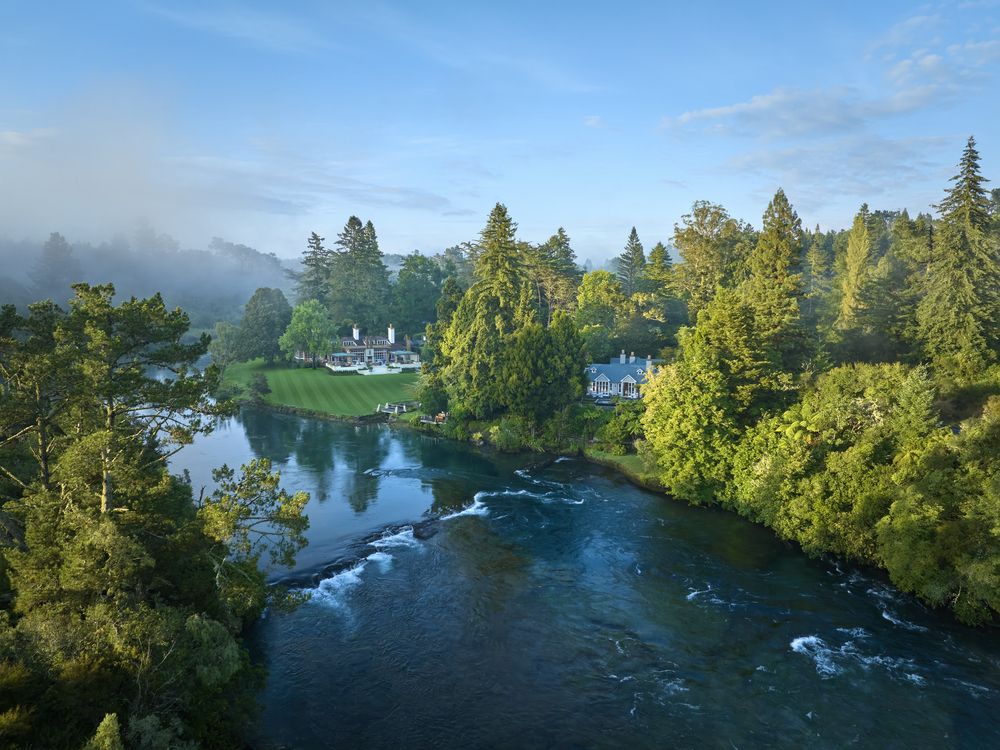
Curling off a fast-moving river into air thick with fern and towering cypress, it gives the whole scene a prehistoric quality, as though something brontosaurusy might emerge from the far bank at any moment. Standing on the veranda of Huka Lodge in my bathrobe, tea in hand, I decide this is the most exquisite morning view I’ve ever had. I bet the Queen of England would have agreed.
Elizabeth II stayed here four times, and with its manicured lawns rolling down to the Waikato River, the hidden dining nooks, the general sense that the world has been tastefully muffled, it’s not hard to see why. Balmoral, it is not. But it is, unmistakably and only, New Zealand.
New Zealand has a way of doing that — pairing things that shouldn’t work together but somehow do. Wild and refined. Adrenalin and stillness.
I’d come to the North Island chasing wine and outdoor adventures. What I found was that New Zealand doesn’t make you choose between what you came for and what finds you. It hands you both.
Two amazing day trips out of Auckland My trip begins, as many good things do, with a boat and wine. Waiheke Island sits 35 minutes by ferry from downtown Auckland, and the crossing through water so turquoise it looks artificially enhanced, allows me to decompress after my 13-hour Air New Zealand flight. The island has no traffic lights, four villages and 27 boutique wineries spread across 92 square kilometres.
“We drink all the wine we produce here — with your help,” says Grant, my guide from Ananda Tours. The island, rimmed with white sand beaches, runs three degrees warmer than the mainland with less rainfall. We day-trippers and the grapes love it.
At Casita Mira, a Mediterranean-inspired lunch arrives alongside a flight of wines, and by the third glass, that transpacific flight feels like someone else’s problem. New Zealand produces just 1.5 per cent of the world’s wine, and Waiheke produces a disproportionate share of reasons to stay for another round, but I need to move on. There are kiwis to find.
Spotting kiwis, those adorable flightless birds found nowhere else on earth, in the wild ranks among the world’s top wildlife experiences. How requires some local knowledge, which is why I find myself an hour north of Auckland in Tawharanui Regional Park, with Auckland and Beyond Tours. After 40 minutes of walking under a half moon, the trail lit by our red flashlights, we hear rustling in the bush.
I catch a glimpse of that telltale, long, curved beak probing deep into the soil before it scurries into the undergrowth. We’re rewarded with four more kiwi sightings, each one resembling a large grey chicken going about its business. A volcanic landscape that’s very much alive The next day, I move onto Rotorua, which announces itself with a warm, eggy undertone, a reminder this landscape is very much alive.
This is the North Island’s geothermal heartland, and for the Māori people who have lived here for centuries, it’s never been merely a backdrop. It’s a living system, a
Source and reference
source of healing, a story told in steam and mud and sulphur-infused mineral water that returns to the earth at the end of each day. Getting above the forest floor The best way to take it all in, I’m told, is from above. So, I hop into a Volcanic Air helicopter. En route to the Tarawera caldera, the pilot banks low over a waterfall pouring straight out of the middle of a cliff face — lava blew through it and water now flows where rock used to be. We land steps away from the epicentre of that violent 1886 eruption and hike around the scoured basin, the red and grey basalt deposits, a sharp contrast to the emerald forests surrounding Rotorua. With Canopy Tours, I’m able to explore the forest through an adrenalin rush. I clip into a harness and zip line through a restored forest of theatrical proportions. Guide Jake Hickman stops us at a rimu tree (red pine), approximately 1,000 years...
Read original source- Published
- Jul 13, 2026
- Updated
- Jul 13, 2026
- Source
- O Canada
- Category
- Tourism
- Read time
- 5 min
Key facts
Why this matters locally
This tourism story matters locally because it may affect readers, businesses, commuters, families, or public services in British Columbia.
Local impact
BC Post links this item to British Columbia coverage so readers can follow related city updates, weather, traffic, events, and category news in one place.
Timeline
Source and credit
BC Post may summarize, organize, and add local context for reader clarity. Original reporting remains with the listed publisher.
Related Articles
View all Tourism
The Art of Migration – A Touring Exhibit Makes a Stop at the Art Gallery of Golden
Tourism
The Art of Migration – A Touring Exhibit Makes a Stop at the Art Gallery of Golden
 Tourism
B.C.'s biggest free multicultural festival returns to Surrey this weekend
Tourism
B.C.'s biggest free multicultural festival returns to Surrey this weekend
 Tourism
Summer in central Alberta, the best celebration of the year
Tourism
Summer in central Alberta, the best celebration of the year
 Tourism
‘Beautiful, bright space:’ New public square looks to help revitalize the ByWard Market
Tourism
‘Beautiful, bright space:’ New public square looks to help revitalize the ByWard Market
 Tourism
GALLERY: Millarville Christ Church hosts Flower Festival
Tourism
GALLERY: Millarville Christ Church hosts Flower Festival
 Tourism
This downtown restaurant is the most fun you'll have eating ramen in Vancouver
Tourism
This downtown restaurant is the most fun you'll have eating ramen in Vancouver
More Local Coverage
Latest news Business
AI Market Trends: Q2 2026 Review and Forecast
Business
AI Market Trends: Q2 2026 Review and Forecast
 Politics
Powerful pro-life ad featuring boxing legend to air during final World Cup matches
Politics
Powerful pro-life ad featuring boxing legend to air during final World Cup matches